December 2019

  • The Culture Map by Erin Meyer – The Eight Scales Of Culture

    The world is a melting pot of cultures. Every country, culture, region, or religion has different rules, regulations, rituals, and norms. Today, the world has become smaller and interactions between different cultures, especially at the workplace, take place on a daily basis. It is therefore essential for leaders in all organizations to be able to understand that people exhibit different behaviours that can be most certainly attributed to the difference in cultures.

    The Culture Map focuses on how culture changes perceptions. It is a great guide for global managers and leaders to understand cultural idiosyncrasies and tailor their communication accordingly for different parts of the world. Moreover, understanding varied cultural backgrounds and thus the inherent perceptions can help in reducing miscommunication.

    I post one book summary every week. To not miss what I learn from the hundreds of books I read every year, subscribe to my bi-monthly Deploy Yourself newsletter and stay updated with the latest on leadership, culture change, and neuroscience.

    Erin Meyer charts out eight culture scales that help in grasping the various cultural communication styles all over the world.

    Scale 1 – The Communication Scale

    Communication is at the crux of all forms of interaction. Understanding how communication differs in cultures, Meyer charts out the communication scale that can help understand values, temperaments, and sense of humour. The communication scale has low-context and high-context cultures. The differences between the two can be attributed to the history of the country.

    • Low-context cultures have precise and clear styles of communication where there are lesser chances of misinterpretation. Countries such as the US and Australia are low-context because their history is shorter, more recent, and has influences of immigrants that required communication to be precise.
    • High-context cultures have layered and subtle communication styles, where one requires to employ a lot of reading between the lines. Countries such as Japan and Korea are high-context cultures mainly due to the homogeneity in population. These countries have a long history, giving them more time to develop nuances. For example, in Japanese ‘kuuki yomenai’ translates to ‘ someone who cannot read the air’, essentially meaning a person who doesn’t understand the ‘between-the-lines’.

    No country can be completely low-context or high-context.  For example, France is more ‘high-context in comparison with Germany, but low-context when compared to China. There are varying degrees and therefore it is important to be able to strike a balance while communicating with teams that are multi-cultural in nature. While communicating with people from high-context cultures, one has to be attuned to the meaning of body language and gestures. On the other hand, communication with a low-context culture will require more specific, precise, and clear communication.

    Scale 2 – The Evaluating Scale

    The Culture Map shows how the evaluating scale is a measure of how one gives and receives feedback. Feedback in the corporate world works like a double-edged sword, especially when one attaches culture to it. Feedback cultures can be either direct or indirect.

    • Direct feedback cultures include forthright language and use absolute descriptions to emphasize the point. Words such as ‘totally’, ‘strongly’, etc. are used to give feedback in direct cultures. Direct feedback styles do not refrain from giving criticisms in front of a group. Countries such as Russia and Israel are examples.
    • Indirect feedback cultures, on the other hand, are subtler, use gentle words, and mask negative feedback with positive words. Indirect feedback cultures mostly use words suck as, ‘maybe’, ‘kind of’, etc. criticisms in indirect cultures are given privately.

    Considering the communication and evaluation scale together, we see that cultures can be divided into four categories – 

    • Low-Context and Direct-Feedback like Germany
    • High-Context and Direct-Feedback like Russia
    • Low-Context and Indirect-Feedback like the USA
    • High-Context and Indirect-Feedback like Japan

    Managers should keep these four categories in mind while communicating with people from different cultures keeping their backgrounds in mind. This will help to eliminate the risk of sounding offensive to the opposite person, especially while providing feedback. For example, while communicating with a person from a culture that is high-context and indirect feedback like Japan, the manager should avoid giving feedback in front of others.

    Scale 3 – Persuading Scale 

    To manage a globally and culturally diverse team, it is important to understand how cultures affect persuasion. The persuasion scale tells us how people are inclined to reasoning to successfully understand and commence a task. The persuasion scale is divided into principles-first reasoning and applications-first reasoning.

    • The principles-first reasoning uses general principles and deduction to draw conclusions by questioning the ‘why’. They are more inclined to the reasoning behind the request. The French and the Italians fall in the principles-first persuasion scale.
    • The Applications-first reasoning is inductive in nature, where persuasion is driven by practice. Cultures such as the US and Canada are more focused on the ‘how’ of a given task.

    When managers have to deal with mixed cultures, it is best to alternate between explaining the why to the ‘principles first crowd and showing the ‘applications first the how of the task.

    Scale 4 – The Leading Scale

    It is obvious that culture affects the leading styles of managers and leaders as well. Therefore, even as an employee in a global network, it is imperative to have knowledge of how cultures affect the workspace.

    The leading scale has an egalitarian culture and a hierarchical culture at two ends of the spectrum.

    • Egalitarian styles of leading in countries such as the Netherlands and Denmark have flat organizational structures. With a narrow gap between employees and managers, the working relationship is egalitarian. For example, egalitarian cultures do not shy from managers and subordinates being on a first-name basis with each other.
    • Hierarchical structures such as Nigeria and China have gaps between levels that are clearly visible. In such culture styles, communication, as well as decision-making, follows a clear hierarchical structure. 

    Cultural differences in leading styles, according to Professor André Lauren, are hugely affected by the history of the country/region. For example, the history of France shows the influences of the Roman Empire’s hierarchical structures and central political standing. On the other hand, hierarchical structures leading in countries such as Sweden are seen due to the impact of the Vikings.

    Therefore working styles with people from egalitarian cultures should be inclusive, where employees are felt as being part of the big decisions. For people in hierarchical cultures, managers should invite employees to give their opinions. This is one of the key takeaways which I found valuable in the book The Culture Map.

    Scale 5 – The Deciding Scale

    While the leading scale gives an idea of how decision-making works in different cultures, there is a separate cultural scale for decision-making altogether. The deciding scale can be consensual, or top-down

    • Consensual scale – Cultures with consensual deciding scales involve everyone in the decision-making process. The final decision is made after all concerned reach a consensus. This type of deciding scale helps in making decisions faster. Countries such as Sweden and the Netherlands are examples of consensual deciding scales.
    • Top-down scale – Such deciding scales follow a hierarchical structure where those on the top of the ladder – the leadership, mostly make the decisions. While decisions are made faster on this scale, the need for regular alterations makes implementing changes slower. Countries such as India and China follow such a deciding scale.

    The Ringi-system in Japan is an interesting mix of the consensual and top-down decision scales. In this system, a ringisho  – a proposal document is passed between the mid-management to edit. The document is then passed on to the next management level. This process is repeated until the document reaches the topmost level.

    When it comes to decision-making styles, it is best for managers to stick to one style, and decide early on, whether the decision-making system itself will be fixed or whether the management is open to flexibility.

    Scale 6 – The Trusting Scale

    Trust is a factor that is central to all business negotiations to be successful. Trust can be divided into cognitive trust and affective trust, where cognitive trust refers to the trust that is built by working with someone for a long time and establishing reliability, and affective trust stems out of emotions. Such trust is often attributed to close relationships such as friends and family.

    Therefore, Erin shows in The Culture Map that the trusting scale has high task-based and high relationship-based measures.

    • High task-based scale – In countries such as the US and the Netherlands, the trust factor is created by achievements in business relations and profits. Such trust can be forged as well as dissolved easily.
    • High relationship-based scale – Countries such as Brazil and China form trust on the basis of shared personal relations and experiences. Such cultures believe that a trusting partnership needs time and effort to be nurtured.

    Trust in any business relationship is vital for success, irrespective of the cultural context that affects it. That said, an effective high relationship-based trust works with all cultures. It is therefore a better form of trust to build than high task-based that works only with a few cultures.

    Scale 7 – The Disagreeing Scale

    Disagreements are natural and inevitable in a social construct. However, different cultures perceive disagreements in different ways. Based on cultures, disagreements can be confrontational or they endeavour to avoid confrontations. 

    • Confrontational – Cultures that are confrontational by nature, such as France and Israel, are able to separate the person from their proposed idea that they do agree with. This outlook does not negatively affect relationships in disagreements.
    • Avoid confrontations – On the other hand, cultures such as Japan and Indonesia have cultures that believe that open confrontation can disrupt the harmonious setting of a group. They also believe that the idea a person puts forth is not separated from the person, therefore disagreeing with the idea is considered equal to disagreeing with the person.

    Additionally, disagreements are also affected by whether emotions in the culture are expressive or inexpressive in style. For example, while both France and Germany have a confrontational culture, they differ in styles where Germans are mostly objective and fairly inexpressive, preferring to keep emotions out of the way of disagreements. France on the other hand, though confrontational by culture is expressive by style.

    Working in a culture mix, it is always better to approach disagreements with caution. It is better to steer disagreements to constructive critiques rather than individual criticisms. This will be evident to you once you read The Culture Map by Erin Meyer.

    Scale 8 – The Scheduling Scale

    Perception of time and schedule differ from culture to culture and can range from linear to flexible on the scheduling scale.

    • Linear schedules – Linear styles focus on one task before they move to the next one and prefer to adhere to deadlines. Moreover, such cultures find it impolite to shift attention from one task to the other without finishing the first task.
    • Flexible schedules – Cultures such as Kenya and Saudi Arabia are flexible where timelines are concerned and believe in multi-tasking. Different topics can be addressed at the same time, and adaptability is a value that holds more weight.

    Managers handling different cultures should be able to understand the differences between flexible and linear cultures and use culture schedules accordingly for individuals. At the same time, the manager should fix the schedule style for the team as a whole and adapt and change when necessary. 

    Conducting business and leadership in the melting pot of cultures can seem like a daunting task. But understanding the nuances using the eight scales can give any management an edge to understanding how people work in different cultures.  Moreover, these scales help in creating effective communication within cultures and help in maintaining a successful, harmonious relationship within global teams. This is the crux of the book “The Culture Map”.


  • Nonverbal Communication – How To Listen To What Is Not Being Said?

    “When the eyes say one thing, and the tongue another, a practiced man relies on the language of the first.”― Ralph Waldo Emerson

    In recent years, technology has brought in a big change in our ways of communication. With the best tech devices and the most vibrant social media platforms around us, there is so much to watch and listen to. Still, we have all been in situations where our own internal dialogue prevented us from giving full attention to a speaker. So the question is, are we really listening?

    Effective listening is not just about hearing what is said but also taking note of things that are left unsaid. Listening to another person may sound like a simple act, but hearing is not the same thing as listening. Nonverbal Communication and Deep listening is not just about listening using the ears, but also listening with our emotions and the entire body. Let’s explore what that means.

    It is often mentioned that only 7 per cent of human communication is verbal. In truth, the exact percentage is not so conclusive. The non-verbal portion of a speech can range from anywhere between 65 to 93 per cent. 

    So spoken language is just one of the many ways by which we communicate. In order to understand the whole picture and listen well, we need to listen and explore beyond the spoken words. Quite often, tone of voice, your eyes, postures, and facial gestures tell a different story than the one the spoken words are telling. However, most people tend to ignore and have rarely learned to listen to the entire body. Hell, it is even difficult to focus on people’s words in this age of distraction.

    Strong nonverbal communication and listening is the foundation of any personal or professional relationship. So it is high time that we pay attention to the nonverbal cues, and learn to listen to what is not being said. Can you listen so well that you notice a shift in the other person’s breathing?

    How to Listen to What Is Not Being Said?

     “Leaders who don’t listen will eventually be surrounded by people who have nothing to say.” – Andy Stanley

    Many famous leaders and personalities from the past were great listeners. One example is Sigmund Freud. His manner of listening was by giving complete attention to the speaker while keeping his gaze and words mild and cordial. The level of attention that he offered to the speaker, made them feel special. 

    To understand the true scenario of any given situation, active listening is a must. This also holds true for any business establishment. Listening to your customers is essential for formulating a successful strategy and making the right decisions. In this article, I will share 3 steps we can all take to listen beyond the spoken word (the emotions, wants, and desires of the speaker), and to what is not being said.

    Step 1 – Clear Your Mind

    We all have our own internal voice which is ON all the time, giving us a running commentary about events happening in real-time. It is very difficult to listen to anyone else when you are immersed in your own world of thoughts. Only with a clear and calm mind, you can focus on what the speaker is trying to convey. Therefore, it is important to listen with a clear mind – without any fear, judgments, opinions, etc about the other person.

    Take A 5 Minute Silent Break Before Important Meetings

    One thing you can do before an important meeting is to take a short break of five minutes (or even two minutes) in a quiet space to calm your mind and prepare yourself to pay complete attention to the upcoming meeting. Use this time to block out your mental noise and allow the mind to calm down.

    If there is something on your mind, it might be a good idea to write that down somewhere to get to it later. This can be very effective to develop the skill of staying focused during the upcoming conversation. Take a few deep breaths during this small break and reorient yourself if you need to. Connect with your values, purpose, and commitments as you step into the other meeting.

    Thoughts arising in our minds can act as distractions. We simply cannot stop these thoughts and any attempt to do that will eventually tire you out. The important thing is to remain aware of them, but not indulge them any further. This will help you to stay on track when your mind starts to drift.

    By taking 5 minutes to prepare your mind and body, you will be ready to pay complete attention to the speaker.

    Give Up Your Opinions, Fears, and Judgements

    It is important to listen to a speaker with an open mind. To listen beyond the spoken words, listen to what is being said without getting filtered by your own prejudices, beliefs, fears, and anxieties. For that, it is important to give up any opinions, judgments, fear, and insecurities you might have about yourself, the other person, or the relationship.

    If you are angry, irritated, or fearful about a person or a situation, it will be difficult to pay attention and listen effectively to the nonverbal cues. For example – do not go into a meeting thinking about how someone is always late, or unreliable, or aggressive.

    Once you judge someone, it becomes difficult to comprehend their viewpoint or their motive. By being non-judgemental, you will have a better understanding of the events or circumstances. As a result, you will be able to understand not just their words but also their concerns and desires. This will help you make better decisions.

    You may feel like replying or arguing to convince the speaker about your views. However, it is important to focus on the speaker’s world and not on our own reply and concerns. Listening is a skill that not only needs complete attention but also requires letting go of our personal biases, that we all have. 

    See Things From Their Point Of View

    “People may not remember what you said, but they will remember how you made them feel”

    ― Maya Angelou 

    You have to imagine yourself in the other person’s position to truly understand and feel what they are trying to communicate. 

    Apart from the literal meaning of the words, pay attention to the emotional content that is being delivered. Keep a close watch on the tone of voice and body language to understand how things look and feel from their point of view. Can you listen to the emotion the other person is feeling? Are they calm, happy, ambitious, frustrated, stressed, or resigned? Can you listen to what the person cares about so much that is making them happy, frustrated, or angry?

    We often view the world through a lens clouded by our own beliefs and opinions. Empathy requires that you observe the world from someone else’s point of view. Empathetically listening to nonverbal cues is not easy, but it is a gift that you can offer as a listener to others.

    Step 2 – Listen Beyond The Words 

    To be an effective listener, you need to be a good observer. In fact, body language is a major way through which true feelings and emotions find expression. By reading and interpreting these signs you can use body language to your advantage not only in the workplace but also in your personal life.

    Our minds are so prone to distractions that concentrating on the speaker is often difficult. An active listener is present in the moment and watches for subtle changes in the speaker’s body language. Noticing such signs will help you differentiate between what their words are saying, and if they are coherent with what their body is communicating.

    Here are some of the signs that you can look out for:

    Facial expressions

    Quite often the spoken words do not match the inner emotions. In such cases, facial expressions can communicate what the speaker is truly feeling.

    Eyes

    Human eyes are the best mirrors that reflect the mind. As the saying goes- “the eyes are the windows to the soul.” Here are a few things to watch out for:-

    • Wide-open eyes indicate surprise
    • Rapid blinking can indicate stress or dishonesty
    • Intense eyes usually indicate anger
    • When the pupils are dilated it can be due to a feeling of fear or romantic interest

    Eyebrows

    Eyebrows can tell a lot about how the speaker is actually feeling.

    • Raised and arched eyebrows indicate surprise
    • A frown or eyebrows knit together indicates anger or irritation
    • When the inner corners are drawn up it indicates sadness

    Mouth

    The mouth can also be a good indicator of emotions apart from the usual happy smile. For example:

    • Biting of lips is usually a sign of anxiety
    • An open mouth indicates fear while a dropped jaw represents a surprise
    • A raised corner of the mouth indicates hate or scorn
    • When the corners are drawn, it indicates sadness

    Body Posture

    The way people position their bodies and move their hands or shoulders can speak a lot about their feelings. By observing gestures, you can understand whether the speaker truly believes what they are saying or not. Do keep in mind that gestures can have different meanings based on cultures and locations. For example:

    • Gripping an item, tapping fingers, or adjusting the hair or clothing can indicate tension.
    • A clenched jaw and tightened neck muscles usually indicate stress.
    • Shaking of legs can indicate anxiety or irritation.
    • Hunched shoulders and arms folded tightly indicate anxiety or fear. On the other hand, it can also mean that the person is feeling too cold.
    • Curving the shoulders forward with folded arms is a defensive posture. The sudden crossing of arms may indicate discomfort or disengagement.
    • A relaxed speaker will have shoulders in a normal position with hands moving freely without jerkiness.
    • A pointed finger with the rest of the hand closed is usually a show of power or dominance.

    Tone of Voice

    A new study has pointed out that listening to the tone of a speaker is often more important for understanding their emotions. For example, even over the phone, we can understand others’ state of mind by their tone of voice. Be it enthusiasm, excitement, or sadness – we can detect all these emotions just from the tone of voice

    With practice, we all are capable of detecting the subtle differences between different emotions from tone of voice. You might have noticed that many people tend to ramble when they get excited or agitated. On the other hand, a slow and steady vocal delivery indicates a thoughtful mental state.

    Paying attention to the emotions in the voice of a speaker helps you to understand what the person is really feeling. In turn, you will comprehend the message the speaker is trying to deliver more effectively.

    Noticing Our Own Body

    Another way to go deeper when it comes to nonverbal communication is to notice your own body as you talk to somebody. Our bodies are tuned to react and mirror what they experience in the room, even in a subconscious way. So if you suddenly feel the tension in your body, the other person might be feeling the same. If you suddenly feel your breathing getting shallow, perhaps the other person is also experiencing the same. Listening to your own body is also a signal you can use to listen to what is not being said.

    Step 3 – Ask Powerful Open-ended Questions

    The first important aspect of deep listening is listening attentively without interrupting. The second is to ask open-ended questions with curiosity to understand the speaker’s concerns, ideas, and emotions better. It also helps you to validate what you are understanding. Never assume on behalf of others. Always validate by paraphrasing or asking questions.

    Here are some examples of powerful open-ended questions.

    • What else would you like to talk about?
    • Tell me more about what’s bothering you?
    • What’s really going on?
    • Can you explain why that matters?
    • I noticed some frustration. Did you not like something about what was just said?
    • In the meeting, I saw you disinterested and with a strange smirk when we discussed that project? What concerns do you have?
    • I could see the surprise and fear on your face. Tell me what worries about this upcoming situation?

    Any question that can be answered with a simple “yes,” or “no,” reply is a closed question. Such questions prevent the possibility of continuing communication. Also, closed questions do not provide detailed information.

    When we ask open-ended questions, we can understand the thoughts and emotions of the speaker, as they have to think and come up with original answers. Sometimes open-ended questions allow people to think and understand their own concerns and thoughts better.

    Remember, while asking open-ended questions, it is best to avoid aggressive questions that can make others defensive. I have observed many managers neglecting this and end up pushing people into a corner.

    Benefits of Listening To Nonverbal Communication

    To be a great leader you have to be a great listener.”- Richard Branson

    Abraham Lincoln was as good a listener as he was a speaker. The 16th President of the United States gave his full attention to every speaker even if their views were different from his own. Many times, he would “lean forward and clasp his left knee with both hands” while listening to others.

    So all his visitors returned with a satisfied feeling. They felt that the president was able to understand their feelings, apprehensions, and motivations. In return, he won their trust and respect.

    Likewise, a good listener needs to be focused, engaged, and flexible. The fast pace of life and the numerous distractions around us are eroding our listening skills in a big way. Only the leader who can overcome that to become a good listener can bring out the best from their team members. 

    By listening without trying to critique or convince we can become more empathetic. It can also offer us an insight into the concerns, hopes, and aspirations of others. Deep listening can not only build trust but can lead to better relationships as it makes us alert and sensitive towards others.

    Communication goes much beyond spoken words. The tone of voice and other physical expressions play a hidden but big part in communication. When we can listen to others – both verbally and nonverbally, we move towards creating more meaningful relationships and being more effective at everything we do.

    References

     1.       https://greatergood.berkeley.edu/article/item/does_your_voice_reveal_more_emotion_than_your_face

    2.       http://web.mst.edu/~toast/docs/Gestures.pdf

    3.       https://www.td.org/insights/listening-is-the-secret-weapon-of-good-leaders

    4.       https://cornerstone.lib.mnsu.edu/cgi/viewcontent.cgi?article=1000&context=ctamj

    5.       https://fremont.edu/how-to-read-body-language-revealing-the-secrets-behind-common-nonverbal-cues/

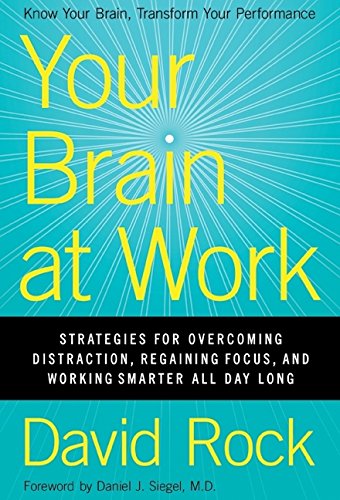
  • Your Brain At Work: Strategies for Overcoming Distraction, Regaining Focus, and Working Smarter All Day Long by David Rock

    As compared to a few decades ago, the human brain gets bombarded with a considerably large amount of information today. Occupations, roles, and work profiles are more creative and thought-oriented. At the same time, with the increase in communication methods and entertainment options, the brain also gets distracted more often.

    We need to use our brains optimally, especially while working, and ensure that the brain focuses on the task at hand. Your Brain At Work (2009) by David Rock looks at a number of neuropsychological studies to analyze how the brain functions in day to day life, and how we can make it focus and work well under pressure to succeed in any endeavor we take up.

    The author suggests 10 tricks to keep the brain functioning at its optimal best :-

    1. Conserving Its Thinking Ability

    The brain’s capacity for thinking actively is limited. This is evident in the fact that we feel exhausted and fatigued by the end of the day. At the same time, multi-tasking can exhaust the brain too. Therefore it is essential to conserve the thinking ability of our brain.

    This can be done by prioritizing tasks and converting them into routines so that the brain does not have to re-use thinking ability for a task it has done before, and we can save its thinking for other tasks.

    2. Minimise Distractions To Keep Focus

    While technology has made our lives easier, it has also increased the number of distractions we have. Once distracted, the brain puts in a lot of effort to refocus the attention on the task at hand. Apart from these external distractions, the brain also has an internal constant stream of distracting thoughts.

    Like our thinking ability, self-control is also a limited resource and gets used up when the brain tries to pay attention and not get distracted. We, therefore, need to conserve our self-control as well. An effective way of doing that is to simply remove or ignore distractions. This essentially translates to developing a habit of not paying attention to distractions when we need to focus actively on a task.

    3. Just The Right Amount of Brain Alertness

    To be able to focus on a task, we need to be interested in it as well as alert. The chemicals norepinephrine and dopamine get triggered when we need to be alert (or in fear of something) and when our interest in something is aroused respectively. 

    For the brain to focus and function at its peak, the level of both these chemicals needs to be just right in the brain. Lower levels lead to poor performance and higher levels lead to overstressing. However, at the optimum levels, these chemicals help the brain to focus and be attentive and generate a positive level of stress.

    However, we can influence the levels of these two chemicals on our own depending on how we feel during a task. If one finds that they are not very interested in a task, they can think of the outcome if the deadlines are not met. This will increase the level of norepinephrine due to fear, and thinking about the rewards if the task is done well could raise the levels of dopamine. Similar examples can be used to reduce the higher levels of these chemicals in the brain.

    4. Take Breaks To Allow Insights And Aha Moments

    There are times when the brain hits a mental impasse – a point where they hit a block. At these times, insight – a sudden stroke of genius or a perfect solution – breaks the impasse.

    This happens due to the unconscious mind. The unconscious delves on certain ideas and concepts and perceives or deciphers the information in a manner that the established logical thought process cannot. Therefore, insights are most common when a person is taking a break and not using the conscious mind.

    While insights happen on their own, we can trigger them too. This can be done by 

    • Not consciously thinking of the problem at hand.
    • Meditating and allowing the mind to wander
    • Speaking the problem out loud to oneself and think objectively
    • Taking a break and doing something else

    5. Mindfulness Helps Improve Memory And Brain Structure

    Mindfulness has many definitions – right from observing one’s own thinking, being aware of one’s experiences in the present, having an understanding of the word ‘is’ or living in the present, etc. To truly increase one’s focus, and be able to control what they pay attention to, mindfulness can be a helpful practice.

    Practicing mindfulness involves regularly focussing attention on physical senses and stimuli – like the feeling of the blanket on your feet as you read, or the roughness of the tongue against the roof of the mouth, etc. It is seen that a person’s attention keeps drifting away to other things. Bringing one’s thoughts back into focus is key.

    Doing this regularly will help to strengthen the parts of the brain that are responsible for memory, attention control, and context-switching, thus altering the brain structure for the better too. 

    6. Use Humor To Gain Back Control And Reduce Uncertainty

    We get triggered negatively when we experience uncertainty and feel out of control. Moreover, studies have shown that we tend to feel more stressed if we need to manage a stressful task without a sense of control. This happens because our brains are wired to experience a sense of reward when the need for control (autonomy) and certainty are fulfilled or satisfied.

    Our emotional response to a lack of control and certainty reflects on how we appraise ourselves. Reappraisal or revaluation of the situation (the uncertainty and lack of control) can help one-change perspectives about the situation and then in turn manage the strong emotions felt. One way to reappraise the situation, gain back control, and remove uncertainty is to add humor to one’s evaluation of the situation.

    7. Letting Go Of Expectations For A Happier Brain

    We all have certain expectations in our life. When things go as we expect, we feel satisfied and happy, whereas when they do not we feel disappointment, pain, and even anger at times. At the same time, the levels of happiness we feel when we experience a positive outcome unexpectedly is much higher.

    These feelings of happiness can be attributed to dopamine. Simply managing our expectations can regulate these levels of dopamine in the body, and the resulting positive emotional response. We need to get accustomed to paying less attention to expectations so as to have our results exceeding expectations.

    8. Our Brains Like Social Relations and Fair Treatment

    Our brains are wired to be social. It needs to be socially connected and be able to relate to others. According to research, the brain, when rewarded with necessary social needs, activates the neural networks of the body that are needed for basic survival. 

    This happens because the brain releases oxytocin – a neurochemical that induces feelings of pleasure – when it makes social connections. Studies have revealed that people who have stronger friendships can deal with stress better.

    Similarly, the sense of fairness is important for the health of the brain. This need overpowers the need for money or financial gains. An experiment showed that unfairness could make a person turn away from a financial reward as well. The brain defends the response to unfairness due to its need for fairness in any situation. This need has evolved over time due to the survival instincts of humans as a hunter-gatherer species in ancient times, to identify cheaters whose behavior could affect trade.

    9. Our Brains Like Any Increase In Status or Importance

    Whenever we find ourselves in a situation that shows our status as higher than someone else or experience a feeling of our status going up, the brain gets triggered with a sense of reward. This trigger is nothing but the release of dopamine and serotonin in the brain and the reduction of the stress-causing chemical cortisol.

    Our sense of improved status is therefore beneficial to the brain, keeping it happy and satisfied. The trick that works to keep the brain happy is to find a niche that makes the brain feel superior at all times. Even tricking the brain into believing that it is superior to its previous self, works.

    10. Feedback Doesn’t Work

    A study has revealed that giving feedback by telling a person what not to do works only 5% of the time and telling a person what to do works only 8% of the time. Feedback makes people anxious and therefore does not work as the brain is already stressed.

    For any form of feedback to work, the person receiving the feedback needs to be calm and in a reflective frame with an increased sense of insight and autonomy. Rather than saying, ‘why did this go wrong?’ saying ‘let’s work out together to find why this didn’t work.’ will work better. Such a positive perspective can raise a person’s status, thereby increasing levels of dopamine and serotonin, and propelling the person’s brain positively.

    Final Summary

    Despite the number of distractions the brain has to encounter daily, the brain can be conditioned to focus successfully. It needs to trigger the right neurochemicals such as dopamine, serotonin, norepinephrine, etc. at the right time and in the right amounts for the brain to work optimally. Certainty, control, improvement in the perception of status, fairness, mindfulness, moments of insight, and conserving our thinking ability are just some of the ways David Rock has written about in the book to increase the brain’s capacity to succeed.

  • Stories for Work By Gabrielle Dolan – The Power of Storytelling

    As children, the world of stories was a fascinating one. Our imaginations took us to new lands, introduced us to new characters, and most importantly served as a treasure trove of learnings. Stories have been at the very crux of communication since ancient times. It is a little known fact that while stories have been powerful enough to shape our childhood, they also have the power to shape businesses as well.

    Right from motivating team members, communicating ideas, or even cracking business deals, Gabrielle Dolan’s Stories for Work (2017) shows that spinning a great tale is a wonderful tool that can make a business tick.

    The Potential Of Storytelling At Work

    How can storytelling be relevant to the workplace? 

    Firstly, stories add color to communication and make the idea to be communicated more interesting. People are more interested in listening to an emotional story about how a company became successful, rather than a presentation of numbers, facts, and figures.

    The power of emotional connection via stories has been used since ancient times. Homer’s Odyssey was originally composed as a verbal poem, to impart cultural values. 

    Stories have been used since time-immemorial to impart values, teach cultural importance, and much more. Similarly, they can be used in business in a number of ways.

    For example, Australia Post, Australia’s postal service, used effective storytelling to instill its revamped organizational values into its vast workforce. They held a 2-day event called ‘Grapevine’, where employees were asked to share a personal story based on one of the company’s new values. The storytelling event helped the shared values of the company increase by 50 to 70 percent.

    Stories Create An Emotional Connect

    Stories have an emotional connect and work at a neuroscience level.

    Stories trigger an emotional reaction in our brains. The neocortex – the part of the brain that manages cognitive functions – works closely with the emotional functions of the brain. When we hear a story, the two parts connect words with logic and emotion to sensory images, to create a vivid mental image. Additionally, oxytocin – the trust hormone – gets released creating the same sense of security we get when we hug a loved one.

    Both these physical responses to stories affect the decision-making process. 

    Our brains are wired to make decisions based on emotional appeal rather than purely on the logic that is used to only back up the emotional reasoning. A story connects to the emotional sense, rather than logical reasoning. A study conducted on 1400 marketing campaigns proves this. The results showed that emotion-driven campaigns had an efficacy of 31%, almost double the 16% efficacy of logic-based campaigns.

    Understanding The 4 T’s Of Storytelling

    There are four categories of stories that can be effectively used for business. 

    They are tragedies, triumphs, tension, and transition. To understand how these four types of stories work, we can imagine them as characters in a party. While tragedies and triumphs will be the loud centers of attraction, the tension, and transition will be the quiet conversationalists occupying the corners. Let us look at these in more detail.

    1. Tragedies – Consider the movie Titanic. It is a classic example of how a tragic storyline works. Tragedy can be used very well at the workplace to relate to a number of organizational concepts. For example, the regional HR manager at Australia Post, used the tragedy to highlight the concept of health and safety. He told the story of how he bought his wife a bike that led to her crashing and injuring herself on her first try. He expected her to know how to turn by merely using his verbal instructions. 

    He applied this situation to work where we assume that colleagues, knowing the office equipment and work environment will keep themselves safe. However, making assumptions about other’s safety is the first error we tend to make.

    1. Triumphs – Triumph stories focus on celebrations, success, and winning, and do not necessarily include the speaker. These could be stories about other people’s triumphs as well. This helps motivate people and give them a feeling of achievement.

    An example of using triumph stories comes from the company Bupa when they were trying to implement their new set of core values amongst the employees. Head of the strategy, John Rizzo narrated a story of his own mother who struggled for five years to successfully fund and create a sensory room for disabled children. He described how his dinnertime conversations changed from rants to stories of success, highlighting the values of passion and selflessness that the company wanted to focus on.

    1. Tension – Tension stories keep the audience on the edge. They focus on friction and conflict – especially amongst personalities, behavior, or values.

    A senior product manager at Australia Post, Jonathan Snelling narrated a story of how he learned the value of humility from his son, on a trip to New Zealand. His story puts him in a spot of tension when he struggled for an hour to change a deflated car tire, refusing help from other people. Once back, his son simply asked him why he refused help from people who had good intentions of helping them. He realized that it was his pride that blinded him from accepting help. 

    It takes courage to open-up about ones own negative aspects, but it is a story type that inspires.

    1. Transition – Transition stories are about major, and moving transformation in one’s life. They deal with big changes and focus on the emotions felt during the transformation.

    Rose McCarthy, an Australian HR Manager, tells a transitional story of how she managed to get a job as a medical receptionist without having any experience. Her move to Ireland with her family was a massive transition in her life. She cited her ability to manage her life even after being uprooted from her old life for the sake of her family as a tale of willpower, determination, and motivation to learn the ropes of a job she had no experience in.

    Finding The Right Stories From Within

    It is one thing to know different types of stories one can use, and yet another to be able to understand when, how, and most importantly which story to use. However, there are a few key tips that can be employed in finding one’s story.

    One can ‘embrace the everyday’, essentially meaning, look for stories in everyday life rather than the big events. A classic example comes from Peter Cook, a Thought Leaders Business School teacher.

    He was obsessed with uneven sideburns to the point where he would cut off 2 mm differences. One day, he realized that he himself has never noticed any person’s uneven sideburns. It made him realize that no one ever noticed his. His ‘daily-life’ story highlights the fact that we put too much emphasis on some things, distracting ourselves from other important things. A mere change in perception can move mountains.

    Finding a story requires one to sit down and brainstorm. There are two types of stories that one can collect from their own lives.

    1. Work-related stories: To get a number of work-related stories, draw a table of 5 rows and columns for the number of jobs one has held. The upper-left box of the table should have ‘Job’ written on it. Fill in the other four empty row boxes with triumph, tragedy, transition, and tension under jobs. Start listing the jobs held on the top row of each column from left to right.

    Once you sit to think and write you will find stories that correspond to each of the story-types.

    1. Non-work-related stories: The process for non-work-related stories is similar. The only change would be to write ‘experience’ instead of ‘jobs’, and start relating experiences in life with the story type.

    The Three-Step Storytelling Structure

    Aristotle, the Greek philosopher introduced the three-step storytelling structure to the world – introduction or beginning, body or middle, and conclusion or end – that is used even today. Let us look at these in detail

    1. Introduction/Beginning – The beginning should be captivating and concise. It should provide context, interest the listener, and most importantly, avoid unnecessary facts and information. The time and place of a story should be included in the introduction to enable listeners to transport themselves there.
    1. Body/Middle – The body or middle of the story is called the heart of the story and contains the most detail. Information given in this part should be relevant to the story and devoid of superfluous information or unnecessary facts and figures that will disturb the emotional connection the story has. It is essential to name characters in a story for people to build empathy and trust.
    1. Conclusion/End – The conclusion should always be tight and impactful that comprises of a bridge, link, and pause. 
    1. The bridge acts as a reset button, bringing the listener’s attention to the main topic. Sentences starting with ‘I’m sharing this with you because…’ help in bridging a story.
    2. The link connects the story with the purpose and intent of sharing it. Sentences such as ‘Here we can see that…’ or ‘imagine what we can achieve from…’ are great linkers.
    3. A pause creates a silence that allows the audience to reflect on the story they have just heard. He pauses let’s the information sink in causing impact.

    Content Is Key

    Content is perhaps the most critical component of storytelling. There are certain rules to ensure that the content of the story is authentic and powerful. The content must be succinct. Too much of verbosity can ruin the effect of a story. Most business stories should be only 1 to 2 minutes long. The following are some additional principles that the content should follow.

    Vulnerability is a great device to embrace during storytelling. It prevents the promotion of self-importance and encourages emotional connection. Vulnerability is best used with triumph stories and is very effective.

    Another effective tool is humor that should be used, albeit with caution. Humour is often used to add flair and character to a story, however; it is like a double-edged sword that can backfire, especially if used in the context of racism, sexism, and at times political humor.

    The final rule of storytelling is practice. While it’s a no-brainer, practice and dedication help in truly making the story yours and instill confidence, get a rhythm, and discover inconsistencies in flow. One method is to write them exactly as they would be said, and practice, practice, practice!

    When And Where to Tell A Story?

    Having a treasure trove of stories is great, but how does one judge when and where to tell a story?

    Just like every story is different, so is the situation, juncture, and opportunity to tell it. A story can be an introduction to a talk or a presentation that helps the audience engage and build rapport. A well-crafted narrative will get them to the edge of their seats early on. A story at the end of a talk or a presentation leaves the audience with an impact and leaves them with something to think about. 

    A story is a great business communication tool. It can be used to nail a sales deal, instil company values, or even represent a personal brand.

    An effective example is using the informal grapevine to instill company values. Though the grapevine – a hidden network of stories passed between employees – is traditionally negative, it can be influenced by positive stories reflecting the values of the company.

    Flexibility And Variety

    Storytelling isn’t just about keeping an arsenal of four to five stories and re-visiting them at every opportunity. One has to have a variety of stories to tell, differently detailed versions of the same story that fit the situation and emphasize a different aspect of the same story. Moreover, it is essential to keep refreshing the story box.

    The stories reserved for business should also have flexibility. Essentially, the stories should be flexible enough that they can be pivoted into any medium and context; for example, an oral story should be flexible enough to be converted into a written blog.

    In Conclusion

    In the world of business, where facts and figures, numbers and lists, statistics and charts rule the roost, stories are like a refreshing burst to connect with people, make successful sales and deals, motivate and inspire team members to perform, and most importantly convey personal and company values.

brain care coaching commitment communication conflict conflicts conversation culture deployyourself deploy yourself emotional intelligence emotions empathy energy feedback freedom future gold habits hope john maxwell language leadership lessons listening performance perspective preparation productive productivity psychological safety purpose questions relationships resolution ryan holiday seth godin simon sinek strengths struggle team trust values words