November 2019

  • The Seven Sins of Memory: How the Mind Forgets and Remembers by Daniel L. Schacter

    Our memories often fail us when we can’t remember simple pieces of information. Remembering someone’s name, forgetting where we kept the house keys, trying to recall an event in our past, or even having repetitive negative memory recall, are examples of how our brain can let us down. Forgetfulness is a flaw that is part of our brain.

    The Seven Sins Of Memory (2002), penned by author Daniel Schacter charts out 7 sins of memory, discussing why and how our memories fail us, its workings, shortcomings, and how these seven sins are beneficial.

    The seven sins can be attributed to the frailty of our minds. They are:-

    1. Transience

    Our memories are subject to transience. They fade over time and lose their accuracy.

    Case in Point:

    1. A study conducted by Hermann Ebbinghaus, a German philosopher in 1885, presented the forgetting curve, showing that memories fade over time. He memorized a list of senseless words and tested himself after nine hours. He inferred that he could not recollect more than 40% of the words, and after a month, he could not remember more than 75%.
    1. After the infamous O.J. Simpson Case in 1995, a Californian research group conducted a study to prove memory transience. Fifteen months on, they asked the research group to give details of when they came to know about the outcome of the trial. Only 50% of the group could accurately describe their whereabouts of when they heard of the acquittal. Moreover, after 3 years, the figures reduced to 30%.

    What To Do?

    We can use certain techniques to combat the transience of memory. People use many memory strengthening techniques. Mnemonics is one such technique developed by the Greeks. Mnemonics work by associating new data to ideas and concepts that have meaning to us. This helps in remembering decontextualized information like names or numbers that we tend to forget.

    Example, to remember the name Lily, one can associate an image of a bunch of lilies in a vase, or imagine how the persons face is shaped like a lily.

    2. Absent-Mindedness

    The brain encodes all incoming information. Absent-mindedness isn’t a failure of memory, but the fact that one did not pay attention to the information. Which means that either the information was not encoded at all, or was partially encoded.

    Additionally, absent-mindedness also occurs when one does not have enough cues to remember the information.

    Case in Point:

    Psychologists Christopher Chabris and Daniel Simons, conducted an experiment to show that paying attention to one piece of information results in complete ignorance of any other incoming information.

    They showed a video of a basketball match to the research group and asked them to count the number of ball passes in the match. In the middle of the recording, a man wearing a gorilla suit runs into the court and beats his chest. At the end of the video, surprisingly, only 50% could recollect the unusual occurrence of the man.

    What To Do?

    One can lessen the instances of absent-mindedness by setting cues that are appropriate to the information they wish to remember. For example, setting up reminders on the phone for exercising, or keeping medication pills near the sink to take them in the morning.

    3. Blockages

    We have all experienced the ‘it’s-on-the-tip-of-my-tongue’ syndrome. Such experiences are not a case of forgetting the information, but merely being blocked by the brain. Blockages in memory happen because the brain doesn’t have enough cues or associated information to recall.

    Case in Point:

    It is easier to remember a person’s occupation than his name because the brain does not collect enough associated information about proper nouns in general, whereas, an occupation will bring up associated information making it easier to remember. Therefore, it is easier to recall a baker by profession, than remember Baker as the last name of a person.

    What To Do?

    Creating information association and adding cues to information one wishes to remember proactively will help in reducing blockages and habituate the brain to recall information. For example, to remember the name Ally, one can use images of a dark alley to make associations with the proper noun.

    4. Misattribution

    Misattribution is probably one of the most dangerous sins of the memory leading to serious implications, most commonly seen in cases of criminal justice. It refers to the syndrome where one incorrectly places one piece of information to something else. 

    Case in Point:

    In the Oklahoma City bombing in 1995, a witness described a second person with the bomber Timothy McVeigh. His description perfectly matched an innocent soldier who had come in the day after, to rent a vehicle with a person who resembled the bomber.

    Misattribution takes place because the brain can recall faces better, however, it misses linking other crucial information such as place and time, thereby mixing it with loose memories.

    In a recent study based on DNA identification of wrongful conviction, an alarming 90% cases were due to wrong eyewitness identification.

    What To Do?

    Misattribution can be prevented by using memory cues to remember information. Measures  have been put in place to reduce cases of misattribution in the legal system. Example, the police now do not ask eyewitnesses to identify culprits in a line-up, rather show them pictures one by one, so that they can carefully screen them.

    5. Suggestibility

    Memories have an inherent suggestible nature. This implies that our memory isn’t as reliable as we think it is. It tends to fill in the details based on general information. Memory often relies on suggestibility to complete the entire story.

    Case in Point:

    Dutch psychologists interviewed a study group about a tragic plane crash incident in 1992, where a cargo airplane has crashed into an apartment in Amsterdam killing 43 people. 50% of the study group answered affirmatively when asked if they had seen the video.

    When asked again later, the number of affirmatives increased by two thirds. The respondents also added details about the crash angle of the airplane and its aftermath. Remarkably, there was no video released about the plane crash. The mere implication of a video made the respondents’ brains create false memories.

    In another case, a man in London, when questioned about a brutal murder, turned himself in a day later with a full confession. This was because his brain fabricated visions, and he was convinced that he was the murderer. He spent twenty-five years in prison before his sentence was reversed when new evidence came to light.

    What To Do?

    Understanding the repercussions of memory suggestibility is essential, especially where the law is concerned. The keepers of justice should avoid leading questions to avoid false memories.

    6. Consistency Bias

    Humans tend to place more value and confidence in their choices/decisions made. That said, we like to affirm that our past decisions and choices were better than the alternatives present at that time – even though, both choices/decisions seemed to carry equal weight then.

    This affirmation of our memories is called consistency bias. It makes one create narratives that make sense.

    Case in Point:

    In a study conducted over four years, couples were asked, twice, to state how their relationships with their significant others were. The participants who replied ‘good’ both times remembered their responses. However, the participants who answered ‘not good’ the second time, falsely started believing that their relationship had never been good and believed that they had said the same thing earlier.

    What To Do?

    Construction of narratives is attributed to the functioning of the left brain. Therefore, one will always find that the brain tries to explain their actions. One should try and view information objectively to avoid consistency bias.

    7. Memory Persistence

    We experience persistent memories due to the highly emotional events that affect us. Persistence is when you remember something all too well, even though you would much rather forget. Moments of embarrassment, or distress that seem to stick with you no matter what.

    Considering that both positive and negative memories can be persistent, memories fail when people get stuck in a loop of negative thoughts. This becomes even more dangerous for people who are habituated to brood over negative events.

    Case in Point:

    The University of Michigan interviewed a group of students to analyze their emotions and mood after an earthquake. They inferred that amongst those who delved more into negative thoughts about the event, were more obsessed about it and subsequently dived deeper into depression.

    In another study, psychologist Daniel Wegner showed that not thinking about something can be counterintuitive. He simply asked his study group to not think about something, for example, their significant other. While some were able to control their thoughts for some time, they rebounded with more intensity.

    What To Do?

    Persistent memories need to be put into a narrative context, in a way similar to letting negative emotions flow out and be done with them. Writing them down or talking to a friend will help to cope with such emotions. This can be done to positive emotions as well to boost their power and influence.

    Absolving Yourself From Seven Sins

    The seven sins of memory are simply side effects of the mechanisms the brain puts in place to adapt to certain situations. For example, if our minds were not susceptible to absent-mindedness, we would end up remembering every single detail of everything we encounter in our lives. At the same time, absent-mindedness also helps us to work on auto-pilot, especially with mundane chores we do every day. Imagine the pressure on the brain if we need to think about all these over and over again.

    Similarly, consistency bias also leads to positive illusions. This positivity, whether it is in the right context or not, helps in keeping us positive. It is therefore futile to try and combat all the seven sins completely. We need them to function normally more than we think!

  • Cal Newport’s So Good They Can’t Ignore You: Why “Follow Your Passion” Might Not Be Good Advice

    The title of the book comes from a famous comedian Steve Martin who once said in his speech ‘’Be so good that they can’t ignore you’’. The author of this book, Cal Newport, a Computer Science professor at Georgetown University, took inspiration from this line to guide people on the reality of how people end up loving their careers.

    We are often told that following our passion can lead us to success but in the 21st century, but as observed by the author, this thinking might be flawed. By studying leading professionals who followed their passion and hopped from one job to another, he came to an understanding that the way we look at passion needs to change.

    The author, Cal Newport refers to Steve Jobs, the genius behind Apple and says that if Jobs had actually followed his passion, he would have been a teacher in a Zen monastery and not been able to achieve all that he did.

    It is skills that give people a competitive advantage in their field, build you a ‘career capital’ and not passion alone. Skills can, as the subheading of this book goes, ‘trump passion in the quest for what you love’.

    Moreover, the author has observed that when people just follow their hearts but do not end up being successful, it can lead to anxiety, depression, disappointment, and a sense of helplessness.

    Here are my 3 biggest lessons from this book :

    1. Decide What Kind of Market You Are In & Adapt

    There are broadly two types of skill markets:

    The winner-take-all market is a market that has rampant competition and a lot of people out there who want to do well in the field. The primary skill required to succeed is to upscale your quality of work.

    So people in this category comprise of – freelancers, writers, musicians, artists, etc.

    The author believes that in this market since people have a few sets of skills, they should work hard on improving them more than juggling between networking and other efforts. 

    The work of such people speaks for itself and they automatically start getting recognized through word of mouth and are then contacted for business.

    Auction markets are a market that isn’t so specifically structured and each person might have a unique skill set. It’s all about seeking new opportunities as they come knocking.

    This is applicable to people in management jobs, and entrepreneurs. 

    It’s possible you spent so many years building a company and because of a financial crisis, it had to be shut down and you had to start afresh. Being experienced as well as being open to new ideas will help you come out of this situation.

    2. Adopt the Craftsman Mindset

    You will come across the term ‘career capital’ multiple times. This is all about how you can build on that. The author refers to a craftsman mindset as one which has rare and valuable skills. The more demanding a job is, it comes with more responsibility, autonomy, and has room for a lot of creativity. 

    When you are allowed to take a few decisions independently and be in charge of how things are going, it is your creative thought process that will help you succeed and win.

    Three disqualifiers for applying the craftsman mindset:

    1. The job presents few opportunities to distinguish yourself by developing relevant skills that are rare and valuable.
    2. The job focuses on something you think is useless or perhaps even actively bad for the world.
    3. The job forces you to work with people you really dislike.

    Once you start listening to Steve Martin and try to “be so good they can’t ignore you”, you’ll be so busy trying to deliver quality work that you won’t even have the time to deliberate what your true calling is.

    Deliberate practice is the way to develop the autonomy and competence you need to boost your intrinsic motivation levels. The key is to stretch — you want to practice skills that are just above your current skill level, so that you experience discomfort — but not too much discomfort that you’ll give up.

    3. Avoid the Control Traps

    The author through a string of studies and research explains that autonomy is a great factor for job satisfaction i.e. having some control. 

    When you have unique qualities and valuable skills, people will come looking for you. Money is a neutral indicator of value. By aiming to make money, you’re aiming to be valuable.

    And as you build those skills, use those as leverage to take control of your career and shift it in directions that resonate with you.

    He also says great careers start with ‘small bets’, i.e. small and achievable projects which would enhance your capabilities and make you feel confident as well. The author further adds that working right trumps finding the right work. We didn’t need to have a perfect job to find happiness — we need a better approach to the work we already have.

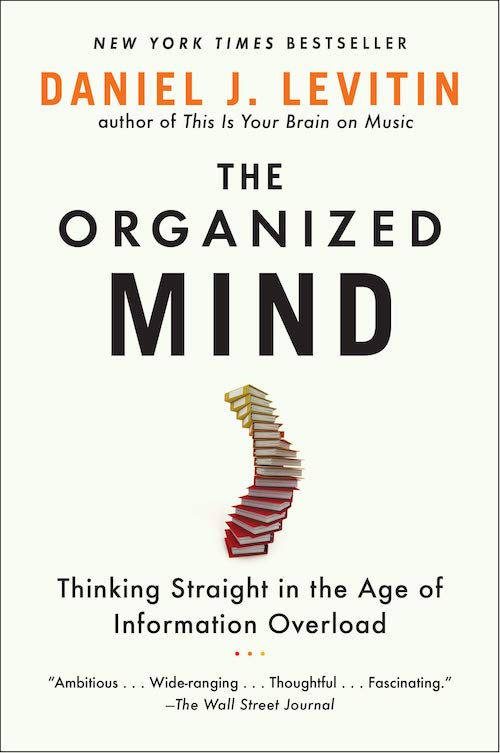
  • Brain Organization 101 – Lessons from Daniel Levitin’s The Organized Mind: Thinking Straight in the Age of Information Overload

    The Organized Mind by Daniel Levitin talks about the mind and the brain, its myriad processes, and systems related to the organization of ideas, thoughts, and decision making. Most importantly, it shows us strategies that will help us organize the vast influx of information we get every day, enhancing our productivity in daily life.

    The mind tends to get overworked with the amount of information it has to process every day. When it’s overworked, it becomes difficult to cope with the decisions we have to make. This results in bad decisions, stress, and even breakdowns. There are, thankfully, a few strategies that one can apply in life to ensure that the mind functions smoothly.

    1. The Attentional System Is Limited

    The attentional system takes care of all incoming information. It determines the way this information is handled and processed. The attentional system can be regarded as a pillar of the brain that has evolved to function in one particular manner – that is to focus on one piece of information at a time. Due to the amount of information the brain takes in every day, the attentional system is under constant stress. 

    The brain also prioritizes its focus on change rather than on what is constant, especially information that could be associated with danger. For example, while driving on a smooth road, the brain will pay attention to a big pothole or a bumpy patch. This is because the change in the smoothness of the road triggers the brain to be more careful.

    The brain can only focus on a limited number of stimuli at a time. And your brain focusses on what is most important.

    2. Constant Decision Making Tires The Brain

    In today’s world, we are constantly getting bombarded with pieces of information. Out of these, the attentional system sorts out the most important information. This puts the brain under immense stress, especially when the brain has evolved to pay attention to one thing at a time. 

    Consider an example where a person is thinking about spending a day off from work versus finishing a presentation. At the same time, there is an exciting program on TV. Simultaneously, the thought of hiring a new maid comes to mind, which reminds the person of the pending house chores. At this point, the person’s brain is trying to focus on what is important. With so many things to think of every day, the stress on the brain increases, and the person is more likely to make incorrect decisions.

    It is therefore essential for us to focus on what is most important, rather than thinking of all the decisions at the same time. One should reduce the amount of time spent on making decisions and find ways to simplify the process.

    3. The Trick to Organization

    We all have faced a situation where we simply cannot remember where we kept the keys last time. Why does the brain fail us at these times?

    The answer lies in the hippocampus. The hippocampus is the part of the brain that is responsible for remembering location. However, its workings are limited to remembering the location of things that have a fixed location. That is why we know for sure where the toothpaste is or where we keep milk. However, we tend to forget the location of things like keys or our mobile phones that do not have a designated place and roam around with us. 

    The solution here is to strictly adhere to keeping things in designated places, like keeping keys only on the key holder near the door.

    4. The Power of To-do Lists

    Let’s say you sit down to do your personal accounts. Then you start thinking about buying something on eBay, and then your mind wanders to the new coffee table you saw at the home store. This mind-wandering can be traced back to the attentional system. The influx of information overwhelms it and we lose focus.

     There are three easy solutions to effective organization – 

    • To-do lists – To-do lists are effective in helping the brain focus. They help us keep track of all the important things outside of our heads.
    • The two-minute rule – It becomes practically impossible to write down every thought and everything we want to do. The two-minute rule helps in prioritizing tasks. If it takes more than two minutes to finish a task then it makes sense to write it down. Otherwise, do it right away!
    • Categorizing – Putting things and tasks in organized categories such as ‘work’, ‘personal’, ‘kids’, etc. helps the brain remember better.

    To-do lists and categorizing are efficient ways to organize the information received by the brain. However, it is impossible to categorize all information we receive. Even categorizing the information in to-do lists at times can be tough. Therefore, creating a ‘miscellaneous’ category helps in saving random ideas and thoughts that do not fit anywhere. 

    The idea of a miscellaneous junk drawer for random items stems from the brain’s need to simplify information and be able to focus on the most important information, even if it belongs to a miscellaneous category. A junk drawer helps in weeding out unnecessary items that one can eventually discard.

    Organization methods such as categorizing and to-do lists help in reducing the pressure on the brain and saves mental energy.

    5. Take Time to Rest and Refuel

    It is important to remember that the brain needs time to rest, refuel, and repair. This happens when we sleep. However, the interesting thing is that even during sleep, the brain does not rest. It uses this break from incoming information to sort the information received through the day. Memories, ideas, problems, etc are processed, stored, and integrated into the existing knowledge. That is why often taking a break increases our productivity.

    The need for refueling can be proven by the fact that most fresh ideas, solutions to problems, etc. come to us after a good night’s sleep. Moreover, many organizations today are focusing on upping employee productivity by incorporating ‘rest time’ and recreational spaces for employees at the office. Research shows that you’re actually twice as likely to solve a problem after you’ve slept on it.

    Key take-aways

    The brain is constantly working due to the barrage of information it receives. It is therefore most important for us today to ensure that our minds are fit and taken care of. Using these strategies for mind organization will help reduce the load on the brain. In this book, the author Daniel Levitin explains how to take back control of your life, by sharing examples and research from healthcare to online dating to raising kids, showing that the secret to success is always organization. 

    The author relies on many psychological studies to support his conclusions. My biggest learnings from the book were how tasks need a beginning and an end, figuring out why I can’t follow the systems I create, what really happens with multitasking, and some great insights into procrastination and strategies to overcome. Overall, it was a fascinating book and I would recommend this book without hesitation.

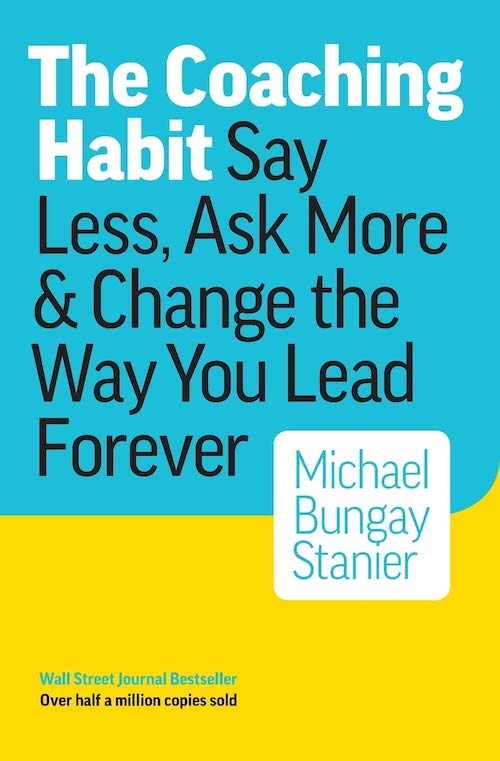
  • The Coaching Habit (2016) by Michael Bungay Stanier

    There comes a time, when a manager starts to mentor and coach the people in his team. But how does a manager become a successful coach? What does coaching entail and how should one make it effective?

    The Coaching Habit (2016) by Michael Bungay Stanier simplifies the elements of effective coaching. Good coaching skills will not only help one’s team members to personally succeed but also pave the way for success for the coach too. A good coach goes beyond subjective training, and some coaches can even transform a life completely.

    To become a good coach, one should be able to ask the right questions and have the correct habits of a coach to ensure that their teams are on the path to success. 

    Spotting The Errors First

    Research has shown that only about 23% of coaching seminars that managers attend have any positive effect on them. Additionally, many leaders, managers, and their teams get stuck in a cycle of unproductive work dynamics and habits. How does one identify what are these problems and more importantly, how does one solve them?

    Here is a list of the common problems that are seen– 

    • All decision making on projects, whether it is a big one or a small one, lies with the manager / leader.
    • The manager / leader becomes the bottleneck.
    • Subsequently, the team loses motivation because they have no decision making power.
    • The manager / leader gets overwhelmed with work.
    • The sheer load makes it difficult for the manager / leader to understand which tasks are critical because all are!

    If, as a manager, you can relate to even one of these problems, then you are stuck in the unproductive work dynamic.

    To get out of this rut, you can first and foremost, develop a coaching habit. A coaching habit is nothing but putting coaching into practice on a daily basis. Managers should, rather than advise, coach their teams, and guide them towards the right path. The daily coaching should always take place in an informal setting, where the manager can reconnect with the team.

    Another set of errors most managers make is to focus on performance. Coaching looks at the larger picture in long run. While performance is important, it can only be improved by guiding the team towards development. 

    Having That Vital Conversation

    Sometimes managers ‘feign’ attention when a team member is discussing an issue. While they nod their heads in comprehension, their minds are elsewhere. While this can happen without really meaning to, managers who wish to become truly great coaches should use constructive conversation tactics to start and maintain a conversation.

    • Kickstart Question – The kickstart question is an effective open-ended question that helps the employee steer the conversation. A simple ‘What’s on your mind?’ does the trick.
    • AWE – AWE stands for ‘And what else?’ Sometimes, it is evident that the employee has more to say and does not know if he should for reasons that could be as simple as not knowing if the manager has time. The AWE question is an encouragement, and at times handy if the coach wants to add in a comment.
    • The Focus Question – The focus question, ‘What’s the real challenge for you?’ is often used to guide the conversation back on track in case the employee is beating around the bush or loses the train of thought. Often, employees tend to vent over certain issues regarding certain projects. The focus question helps the employee to identify which issue is more challenging and needs prompt attention.

    As a coach, it is essential for leaders to know that these questions nudge the employee into finding their own conclusions. Leaders and managers wanting to become coaches should be there to listen and guide rather than offer the solutions themselves.

    Conducting The Conversation Correctly With Questions

    While the previous heading discussed questions for triggering a conversation and to keep the focus on track, coaches need to have a few more successful questions in their arsenal. Stanier gives four important questions that help a coach understand what the employee needs, what they want, and most importantly what are they willing to do about it.

    1. The Foundation Question – The Foundation Question, ‘What do you want?’, is used to get the conversation straight to the point. It helps the coach understand what exactly the employee is looking for from the conversation. 

      Research shows that 9 types of needs and desires drive people. They are freedom, recreation, creation, affection, protection, participation, understanding, identity, and subsistence. Foundation questions will help in determining what drives the employee.
    1. The Lazy Question – The lazy question is a moment of positive coaching. The question ‘How can I help you?’ helps in determining if the employee really wants something or is letting off some steam. Being a direct, to-the-point question, the employee’s ability to answer it will not only get the answer but also help the coach respect the directness of the employee.

      It even helps the employee move on after letting off steam. From the employee’s perspective, it shows that the manager is interested in his needs and wants and that the manager understands him.
    1. The Strategic Question – Once the need/want is identified, the coach reaches a point in the conversation where he needs to know whether the employee can handle what he is approving. 

      Asking ‘If you’re saying ‘yes’ to this, what are you saying ‘no’ to?’ helps the coach gauge whether the employee can take on a new project, whether he has the capacity to finish previous ones, and most importantly if the employee is accepting a decision simply because the manager is handing it out.
    1. The Learning Question – Once the conversation is nearing its end, it is important to know if the conversation has sunk in. To make the employee derive learning from the discussion, to reflect, and to internalize, the coach has to create a learning opportunity for the employee. Asking ‘what was most useful for you?’ will help achieve that.

    The Manner Of Questioning

    While it is essential to know what questions to ask during a coaching session with any employee, understanding how to question is more than half the battle won. Sometimes, without meaning to, a coach could end up blurting out the solution. Coaches need to be wary of that. 

    Firstly, the conversation should never seem like an interrogation. Therefore coaches should be careful with the succession of questions as well as their implications. While a question should never intend to feel uncomfortable, it should be clear and to the point. To do this, asking ‘what’s?’ are more useful than asking ‘why’s?’

    For example, it is better to ask, “What do you think?” rather than, “why do you think that?”

    Avoiding rhetorical questions is equally important. These include questions such as, ‘did you consider…?’, or ‘have you thought…?’. Such questions are simply advice with a question mark.

    Mannerisms and gestures also go a long way in making a conversation successful. There is a difference between listening and appearing to listen, and both are essential to keep the employee engaged in conversation. Listening is very important, whereas, appearing to listen – with a nod, or an encouraging silence after a question – can help the employee share what exactly on their mind without inhibition.

    Forever Expert Coaching

    In conclusion, managers and leaders should cultivate a habit of coaching. Cultivating a habit includes practicing coaching daily. While a few words can enlighten you and push you to learn how to coach, the tips mentioned above should become daily actions.

    Changing habits involves putting theory in to practical use. This can be achieved in 5 steps – 

    • Cause – It is the reason to change the current behavior, for example, constantly advising. 
    • Trigger – Understanding the moments when advice is needed and when it is not. 
    • Mini habit – Understanding the errors, using appropriate questions and the correct manner of questioning are the mini habits.
    •  Training – Practicing mini habits daily becomes training. 
    • Action plan – An action plan is an outline of what a coach should do in cases of slips, to get back on track.

    For developing a coaching habit, managers and leaders can create coaching support groups too. These support groups can be useful in sharing strategies and experiences so that they can create empowered teams in their organization.

brain care coaching commitment communication conflict conflicts conversation culture deployyourself deploy yourself emotional intelligence emotions empathy energy feedback freedom future gold habits hope john maxwell language leadership lessons listening performance perspective preparation productive productivity psychological safety purpose questions relationships resolution ryan holiday seth godin simon sinek strengths struggle team trust values words