
The Leadership Trap: Why Serving Beats Pleasing Every Time
How breaking free from this childhood programming of pleasing others can transform your leadership and life
Picture this: You’re in a meeting, and something isn’t right. The project is headed toward disaster, but everyone’s nodding along. You know you should speak up, but… what if they don’t like what you have to say? What if it makes waves? So you stay quiet, smile, and hope someone else will be the bad guy.
Sound familiar? Welcome to the pleasing trap – the invisible prison that’s keeping most leaders from their true potential.
The Programming We Can’t See
Here’s the uncomfortable truth: We’re all walking around with childhood software that’s completely obsolete for adult leadership. As kids, our survival literally depended on pleasing the giants (our parents, teachers, etc) who fed us, sheltered us, and kept us safe.
How We Got Programmed to Please:
- Survival Strategy: Small children learned that pleasing powerful adults meant getting food, shelter, and safety
- Parental Reinforcement: “Good job, sweetheart!” “You were so well-behaved today!” “Mommy’s so proud when you’re nice to everyone!”
- Personality Formation: We built our entire identity around what worked to win approval
- Biological Programming: Our psychological “brain” got hardwired to seek approval first, serve second
This is not wrong or bad. This is just what it is. This is how kids grow up. This is how we treat kids to help them grow up.
The Invisible Impact (Fish in Water Effect):
This programming runs so deep it’s like being a fish in water – we can’t see it because we’re swimming in it. Every day, leaders unconsciously deploy these same tactics:
- Communication: Carefully crafted emails that say nothing substantial
- Meetings: Everyone agrees but nothing actually gets decided or done
- Feedback: Dancing around real issues to avoid discomfort
- Decision-Making: Choosing what’s popular over what’s right
But here’s the kicker – what kept us alive as children is killing our leadership as adults.
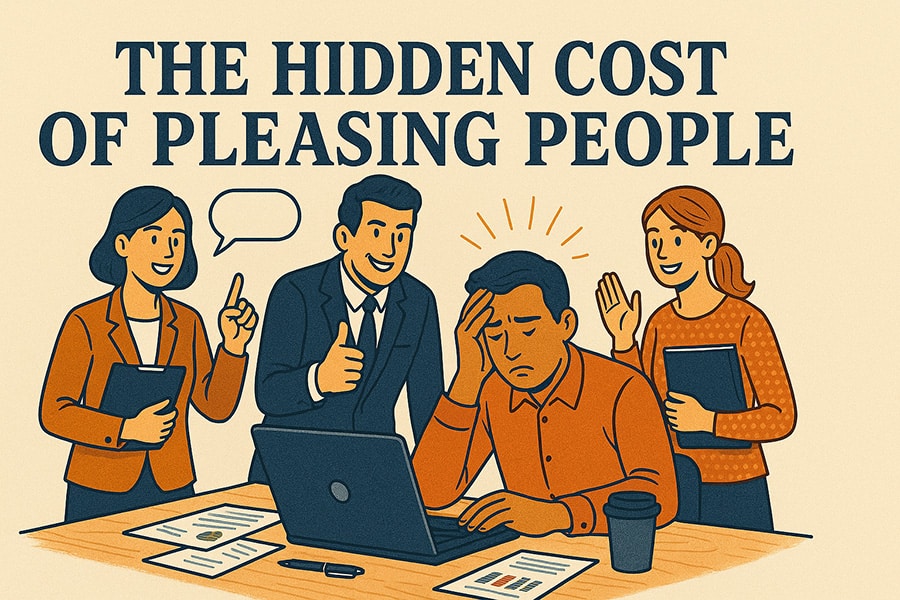
The Hidden Cost of Pleasing
When leaders operate from a pleasing mindset, they’re not just being ineffective – they’re creating a slow-motion disaster.
The Organizational Impact:
- Mediocrity Becomes Normal: Every avoided difficult conversation teaches your team that “good enough” is acceptable
- Problems Fester: Issues that could be solved early become organizational cancer
- Trust Erodes: People sense the inauthenticity and distance themselves
- Results Suffer: Short-term comfort destroys long-term success
The Personal Cost:
Leaders who default to pleasing report:
- Chronic Exhaustion: Constantly performing drains your energy
- Emotional Isolation: Never sure if people like you or just your pleasing persona
- Frustration: Knowing you’re not operating at your full potential
- Disconnection: Relationships feel surface-level and transactional
- Imposter Syndrome: Living as a performing self instead of authentic self
It’s a lonely, miserable way to live – and it shows up in everything from their energy levels to their ability to inspire genuine loyalty.
I speak from personal experience. I have spent most of my life pleasing people and avoiding any uncomfortable situation.
The Service Revolution
Now let’s talk about the alternative that changes everything: service (of the person in front of you). Real service isn’t about being nice or making people happy – it’s about making their lives genuinely better, even when it’s uncomfortable to you or them.
Giving alcohol to an alcoholic would be pleasing them.
Sending them to rehab would be serving them, even though that would not please them and they might even hate you for it.
That’s what real leadership looks like – sometimes you have to disturb the peace to create something better.
What Service Requires (That Pleasing Never Does):
- Courage: Telling someone what they need to hear instead of what they want to hear
- Strength: Holding your ground when your service isn’t immediately appreciated
- Wisdom: Knowing that sometimes the most loving thing you can do is be the villain in someone else’s story
- Confidence: Believing in your ability to add value, even when it’s not immediately recognized
- Authenticity: Operating from your true self, not your performing self

Service in Action: Growing Up as a Leader
1. Team Alignment: The Truth-Telling Leader
The Situation: Gunjan, a VP at a tech startup, noticed her team was consistently missing deadlines.
The Pleasing Approach Would Have Been:
- Work around the problem (hire more people, extend timelines)
- Avoid confrontation
- Hope things improve naturally
- Make excuses for the team
The Service Approach:
- Called a direct meeting: “We need to talk about what’s really happening here”
- Created space for honest conversation
- Uncovered the real issues: team conflict, personal overwhelm, secret drowning in stress
- Focused on solutions, not blame
The Result: Team hit their next three deadlines ahead of schedule.
2. Sales: The Demonstration of Value
Instead of the typical pleasing approach:
- Song-and-dance of features and benefits
- Trying to “win over” prospects
- Focusing on what they want to hear
- Building fake rapport
Service-oriented leaders focus on:
- Immediate value demonstration
- Asking: “What’s the biggest challenge you’re facing right now?”
- Spending time actually helping them (for free) and not chit-chatting
- Refusing to spend time on frivolous issues or waiting
- Making their life better before asking for anything
Example: Shiv, a consultant, stops trying to “win over” prospects and instead spends 15 minutes helping them think through their biggest challenge. He raises an objection and is willing to walk away if he is made to wait for the potential client and not treated as an equal.
This isn’t a sales tactic; it’s genuine service. People don’t need to be convinced to work with someone who’s already making their life better.
3. Trust Building: The Accountability Partner
Service-Based Trust Building:
- Do what you say you’ll do (reliability)
- Hold others accountable to their commitments. Don’t let them slip.
- Refuse to let people settle for less than their potential
- Create psychological safety through consistency
Example: Jennifer, a CEO, serves her leadership team with monthly “reality check” sessions. She asks each leader:
- Where are you struggling?
- What support do you need?
- What’s one thing you’re avoiding?
- How can we help you succeed?
It’s not comfortable, but it’s transformed how they work together because everyone knows they can count on honest feedback and real support.
4. Holding Others Accountable: The Courageous Conversation
This might be the ultimate test of service versus pleasing.
The Pleasing Approach:
- Let underperforming team members slide
- Avoid difficult conversations
- Hope things improve on their own
- Enable mediocrity to keep peace
The Service Approach:
- “I care about your success too much to let this continue”
- “Let’s figure out what needs to change”
- Be willing to be the bad guy today to help someone become better tomorrow
- Focus on their growth, not their comfort
Key Mindset Shift: You’re not being mean; you’re being loving enough to have the hard conversation.
5. Living a Happy and Joyful Life: The Authentic Path
The Pleasing Paradox: The more you try to make everyone happy, the more miserable you become.
Benefits of Serving irrespective of how it is received:
- Live from your authentic self instead of your performing self
- Stop exhausting yourself trying to be everything to everyone
- Start energizing yourself by making a real difference
- Feel more connected, purposeful, and genuinely happy
What Service-Oriented Leaders Report:
- Better sleep (knowing they’re making a genuine difference)
- More energy (excited about problems to solve and people to help)
- Deeper relationships (based on authenticity, not performance)
- Greater life satisfaction (purpose-driven instead of approval-driven)
The Uncomfortable Truth About Service
Let’s be honest: service isn’t always popular. When you serve people, sometimes they don’t like it. Sometimes they resist. Sometimes they push back. And that’s okay – it’s part of the job.
Why Service Can Be Uncomfortable:
- Immediate Resistance: People might not want what they need
- Short-term Friction: Disturbing the status quo creates temporary discomfort
- Rejection Risk: Some people will say no to being served
- Misunderstanding: Your motives might be questioned initially
- Responsibility: You’re accountable for the outcomes you create
That’s what service looks like in leadership – you’re willing to risk the rejection because you believe in the value you’re providing.
The Deathbed Question
Steve Chandler asks a powerful question: When you’re on your deathbed, what will you ask yourself?
- “How many people did I please?”
- “Did I avoid enough conflicts?”
- “Was I liked by everyone?”
- A career of avoided conflicts, missed opportunities, and relationships that never quite felt real
OR
- “How many people did I serve?”
- “What difference did I make?”
- “Is life different because I was here?”
- A life of genuine impact, authentic relationships, and problems solved
Making the Switch: From Pleasing to Service
Start Small – Daily Practice Questions:
In your next meeting, ask yourself:
- “What would serve this group right now?”
- “What question needs to be asked that no one wants to ask?”
- “What’s the elephant in the room?”
- “What assumption is holding everyone back?”
In your next one-on-one:
- Instead of: “How can I help you?” (often leads to pleasing)
- Ask: “What do you need to hear right now that you’re not hearing?”
In your next difficult conversation:
- Instead of softening the message to make it palatable
- Deliver it with love but without dilution
The Three-Step Service Framework:
- Identify the Need: What does this person/situation actually need (not want)?
- Assess Your Ability: Can you genuinely serve this need?
- Deliver with Love: Provide the service, even if it’s uncomfortable
The Service Mindset: Key Mental Shifts
From Pleasing Questions to Service Questions:
| Pleasing | Serving |
|---|---|
| “How can I make this person happy?” | “How can I make this person better?” |
| “What do they want to hear?” | “What do they need to hear?” |
| “How can I avoid conflict?” | “How can I create value?” |
| “Will they like me?” | “Will this help them?” |
| “What’s the safe thing to do?” | “What’s the right thing to do?” |
Service = Ownership: Taking full responsibility for demonstrating value and making someone’s life better
Pleasing = Victim: Believing all power is outside of you, requiring approval from others to feel safe
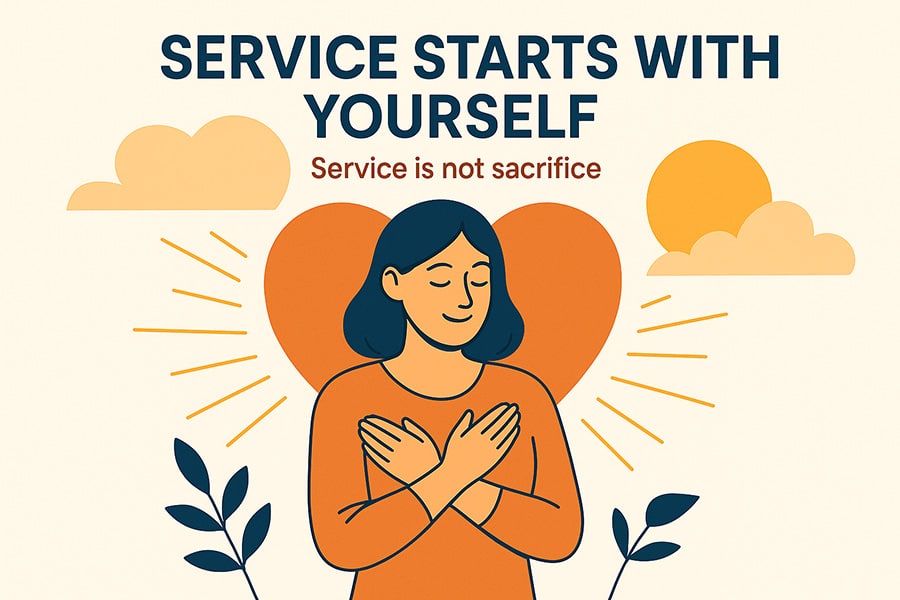
The Ripple Effect: What Changes When You Serve
For Your Team:
- Real Conversations: Replace polite agreements with honest dialogue
- Problem-Solving: Address actual issues instead of managing around them
- Psychological Safety: People feel safe to be authentic and vulnerable
- Higher Performance: Standards rise when mediocrity is no longer acceptable
For Your Organization:
- Culture Shift: From artificial harmony to genuine collaboration
- Innovation: People feel safe to challenge assumptions and propose bold ideas
- Accountability: Everyone holds themselves and others to higher standards
- Results: Better outcomes because truth drives decision-making
For You:
- Authenticity: Finally get to be yourself instead of performing
- Energy: Feel energized by making a difference instead of drained by performance
- Relationships: Build connections based on genuine value, not transactions
- Legacy: Look back on a life well-lived and say, “I made a difference”
The choice is yours: Will you spend your career trying to please everyone, or will you commit to serving them?
Make It Count
- This Week: Identify one difficult conversation you’ve been avoiding and schedule it
- This Month: Ask your team what they need to hear that they’re not hearing
- This Quarter: Implement one uncomfortable change that will genuinely serve your organization
- This Year: Build a reputation as someone who makes people’s lives better, not just happier
The difference isn’t just in the results you’ll produce – it’s in the person you’ll become.
Remember: Service isn’t about being perfect. It’s about being willing to risk temporary discomfort for lasting value. That’s not just better leadership – that’s a better life.
Leave a Reply