
In 2000, Blockbuster’s leadership team had a meeting that would go down in business history as one of the most expensive examples of righteous stupidity ever.
Netflix founders Reed Hastings and Marc Randolph flew to Dallas to pitch a partnership to Blockbuster CEO John Antioco. Netflix was struggling – they were losing money, had only 300,000 subscribers, and were desperate. They offered to sell Netflix to Blockbuster for $50 million and run Blockbuster’s online division.
The Blockbuster executives literally laughed them out of the room.
Why? Because they were “right.” They had 9,000 stores, 60 million customers, and $6 billion in revenue. They were the undisputed kings of home entertainment. These Netflix guys with their silly mail-order DVD service? Please.
Blockbuster’s leadership was so committed to being right about their existing model that they couldn’t see the future coming. They were so attached to their righteousness – “We’re the biggest, we’re the best, we know this industry” – that they missed the greatest opportunity in entertainment history.
By 2010, Blockbuster filed for bankruptcy. Netflix, the company they could have bought for $50 million, was worth $13 billion.
The Blockbuster executives were technically “right” in 2000 – they were bigger, more profitable, and had more customers. But their need to be right, their attachment to their existing success, their inability to be wrong about their core assumptions, killed them.
Being right is killing your momentum and sucking joy out of your life
Here’s the brutal truth that most leaders won’t admit: you’re so terrified of being wrong that you’ve turned your entire leadership style into one giant hedge bet. And it’s absolutely destroying or slowing down everything you’re trying to build.
But let’s zoom out for a second and look at the bigger picture. This isn’t just a business problem. This is a human epidemic. We live in a world where people are literally willing to get fired, resign from prestigious positions, lose promotions they’ve worked decades for, go to war, and even commit acts of violence – all to protect their righteousness and avoid looking wrong.
Think about that for a moment. Our beings are so fragile, our egos so brittle, that we’ll sacrifice our happiness, our relationships, our success, even our lives, just to avoid the temporary discomfort of being incorrect about something.
I see it everywhere. In boardrooms where leaders speak in corporate-speak instead of taking clear positions. In strategy meetings where everyone’s “testing the waters” instead of making bold calls. In conversations where executives say things like “we’ll see how it goes” or “let’s wait and see what the data shows” when what their company actually needs is someone to plant their flag and say “this is what we’re doing.”
But it goes deeper than business. Look at the political landscape – politicians destroying their careers rather than admitting they were wrong about a policy. Look at international relations – nations sending their young people to die rather than backing down from a position. Look at corporate scandals where executives double down on obviously failing strategies because admitting error feels like death.
You know what this really is? It’s not prudent leadership. It’s not being strategic. It’s cowardice dressed up in business casual, and it’s the same cowardice that’s tearing apart families, organizations, and entire countries.
The Global Pandemic of Fake Righteousness
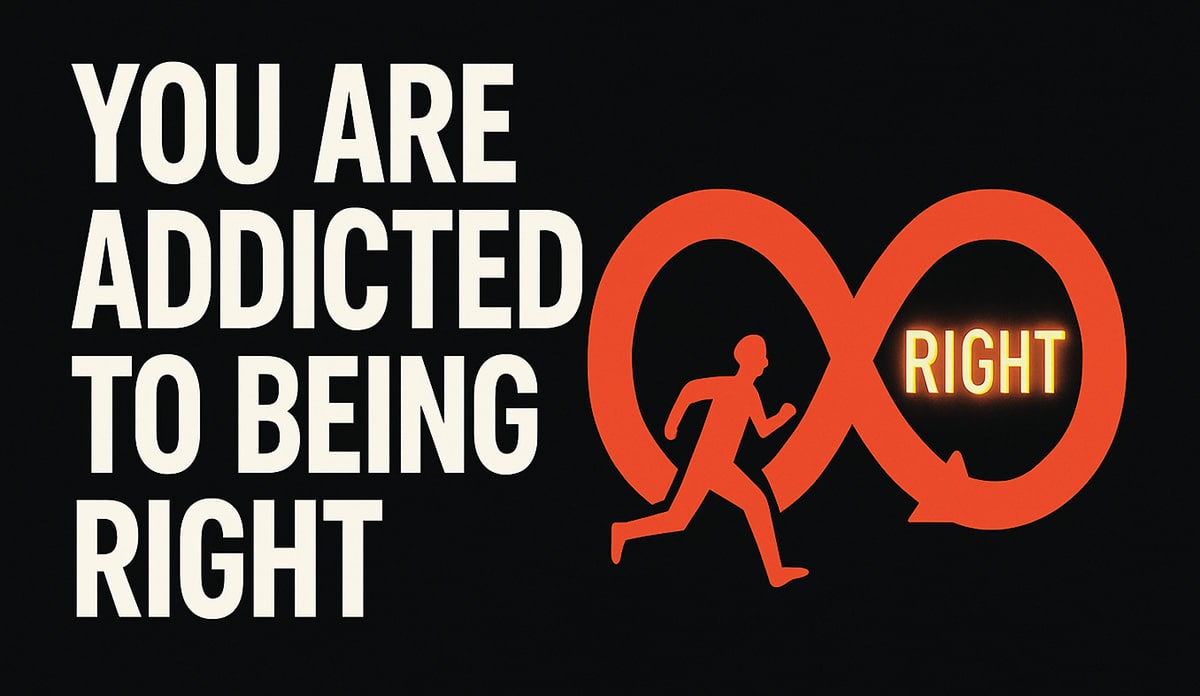
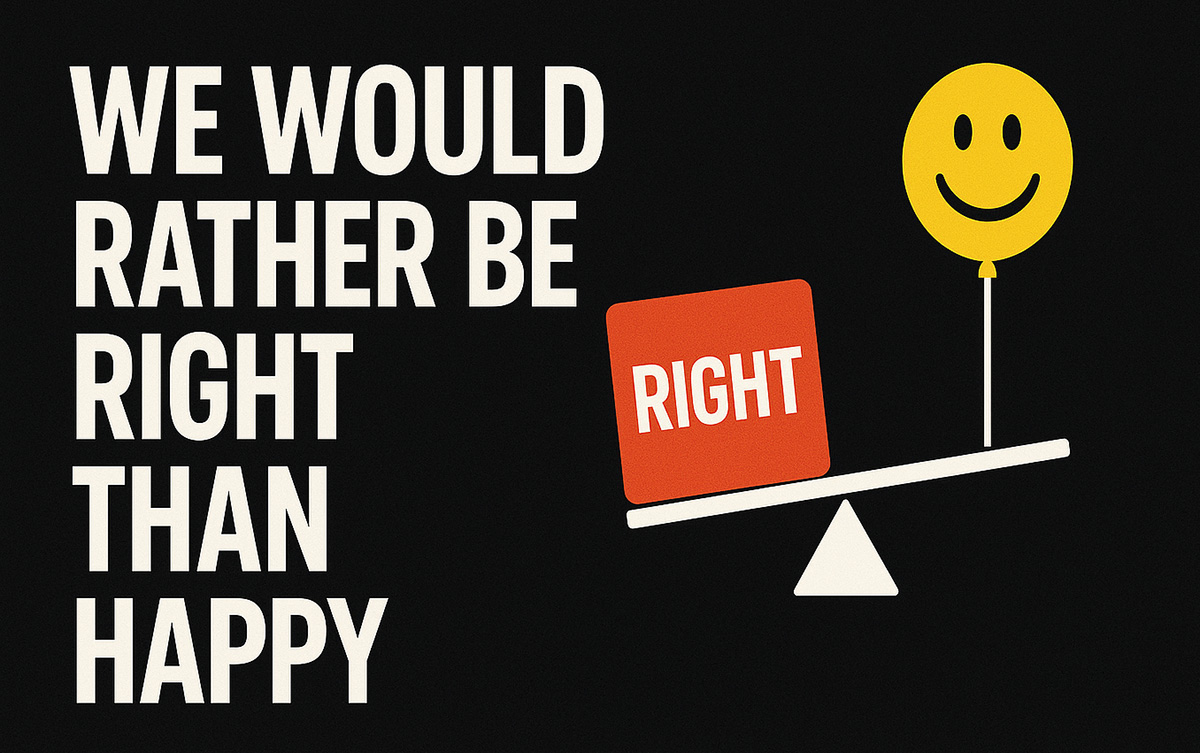
Here’s what’s absolutely insane: we’d rather be right than happy. We’d rather be right than successful. We’d rather be right than loved. Left to our own devices, most of us would choose the bitter satisfaction of righteousness over the joy of actually getting what we want in life.
And the most tragic part? Half the time, we’re not even actually right. We’re just committed to a position we took years ago that we can’t let go of because our entire identity has become wrapped up in it.
I’ve watched CEOs tank their companies rather than admit their strategic vision was flawed. I’ve seen leaders in every industry – from tech to healthcare to government – choose career suicide over the simple phrase “I was wrong, let’s try something different.”
We’ve created a world where being wrong is treated like a moral failing instead of what it actually is: information. Valuable, necessary information that helps us course-correct and improve.
The Million-Dollar Lesson from an 80-Year-Old Badass
Let me tell you about Mary Shakun, who didn’t start coaching until she was 65 and now charges over a million dollars a year. At 80 years old, she’s still cold-calling potential clients. But here’s what makes her extraordinary: when she sits across from someone with billion-dollar problems, she looks them in the eye and says, “I’m the only person in the world qualified to help you with this.”
The kicker? She quietly admits that most of the time, that’s actually true.
Think about that for a second. She shows up with 100% certainty while acknowledging she might be wrong some of the time. She’s not attached to being right – she’s committed to being certain.
And that distinction is everything.
While the rest of us are so terrified of that 1% chance of being wrong that we never show up powerfully at all, Mary has built a million-dollar business by being willing to be wrong occasionally in service of being powerful consistently.
You are addicted to being right
Most leaders have this completely backwards. They think certainty means you have to be right all the time. So they hedge. They qualify. They create escape routes in every sentence they speak.
“Well, if the market conditions remain favorable…” “Assuming our projections are accurate…” “We’re cautiously optimistic that…”
Stop it. Just stop.
This hedging isn’t just killing your business momentum – it’s killing your soul. Every time you refuse to take a stand, every time you speak in maybes and possibles, you’re slowly dying inside. Because deep down, you know you’re capable of so much more than this watered-down, committee-approved version of leadership.
Certainty isn’t about being right. It’s about taking a position and moving powerfully from that place. Certainty is about taking action and making shit happen.
Being right is just the post-game analysis – it’s what happened after you already took action. Being right is only about looking good and posturing.
When you’re obsessed with being right, you’re living in the future results instead of the present moment where all your power actually lives. You’re so busy protecting yourself from the possibility of being wrong that you never fully commit to anything. And uncommitted leadership? That’s not leadership at all.
Kodak
In 1975, a Kodak engineer named Steve Sasson invented the world’s first digital camera. He presented his toaster-sized, 0.01-megapixel creation to company executives. Their reaction was not excitement, but fear. Kodak was a company built on film, paper, and chemicals—a highly profitable “razor and blades” business model. The executives were addicted to the “rightness” and profitability of this model.
They asked Sasson, “Why would anyone ever want to look at their pictures on a television set?” Their entire worldview was based on physical prints. Admitting that Sasson’s invention was the future would mean admitting that their entire business model was, eventually, going to be wrong. So they did the unthinkable: they buried the technology. They told Sasson to keep his invention quiet, convinced that they could control the transition and protect their film empire forever.
The Damage: Kodak’s addiction to being right about the supremacy of film was a corporate death sentence. While they sat on the patent, other companies like Sony, Canon, and Fuji developed their own digital cameras. When the digital wave finally crested, Kodak was woefully unprepared. They were too slow, too attached to their legacy, and too convinced of their own infallibility. The company that had once been a symbol of American innovation filed for bankruptcy in 2012.
Your Rightness Addiction Is Costing You Everything
Let’s get brutally honest about what this addiction to being right is actually costing you – because it’s not just professional, it’s existential:
Your team’s respect. They can smell your uncertainty from a mile away. When you hedge every decision, speak in maybes, and constantly cover your bases, your people lose confidence in your ability to lead them anywhere worth going. They’d rather follow someone who’s wrong occasionally but decisive than someone who’s never wrong because they never actually say anything.
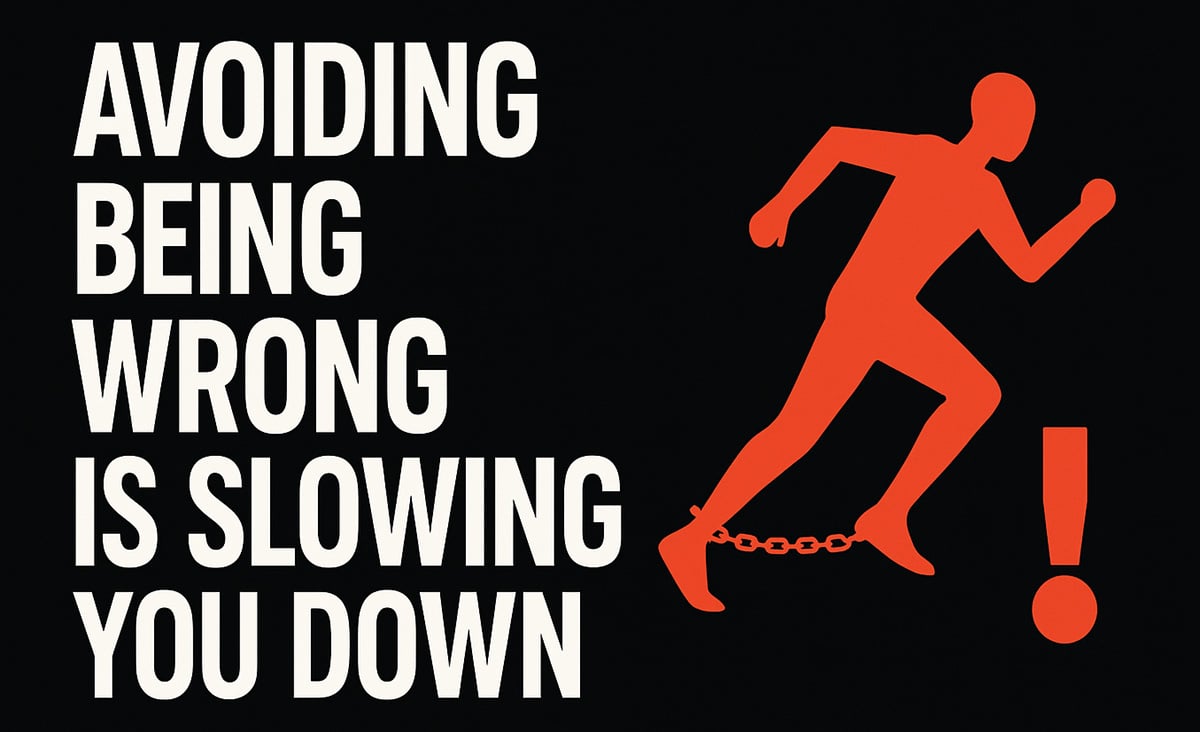
Your company’s momentum. Momentum requires decisive action. When you’re always waiting for more data, more proof, more certainty that you’ll be right, opportunities slip by. Your competitors – the ones willing to be wrong sometimes – are eating your lunch while you’re still in analysis paralysis.
Your own joy and aliveness. Think about the last time you felt truly alive as a leader. I bet it wasn’t during a meeting where you carefully managed everyone’s expectations. It was probably when you took a bold stand, made a big bet, or fought for something you believed in. That’s what certainty feels like – and you’ve been starving yourself of it.
Your capacity to inspire. People don’t follow hedge bets. They follow vision, conviction, and leaders who are willing to put their reputation on the line for something bigger than themselves. When you’re more committed to being right than being powerful, you become utterly uninspiring.
Your relationships. This doesn’t stop at work. How many marriages have been destroyed by the need to be right? How many friendships have ended because someone couldn’t just say “you know what, I was wrong about that”? Our addiction to righteousness is literally destroying our capacity for love and connection.
The Global Cost of Our Fragile Beings
Look around at the world we’ve created with this pathology. Political leaders who would rather watch their countries burn than admit their policies aren’t working. Business leaders who would rather see their companies fail than acknowledge their strategies are flawed. Religious and ideological leaders who would rather see their followers suffer than question their doctrines.
We’re living in a world where people are willing to die – and kill – for the right to be right. Where entire industries collapse because no one in leadership has the courage to say “we got this wrong, let’s pivot.” Where families are torn apart over political disagreements that, in the grand scheme of things, matter far less than love and connection.
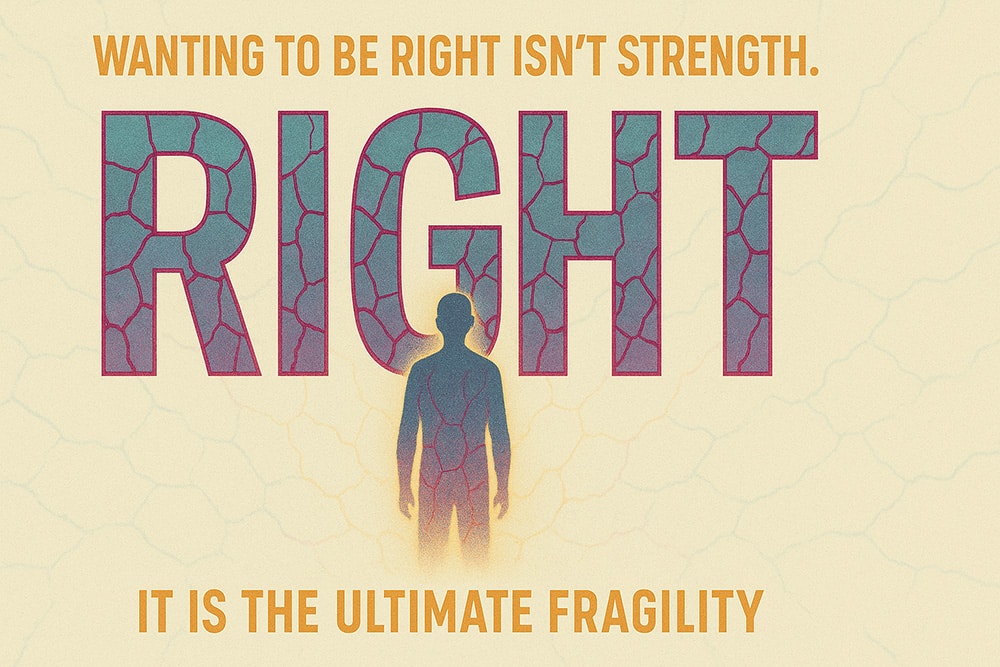
This isn’t strength. This is the ultimate fragility – beings so terrified of being seen as fallible that they’ll sacrifice everything real and meaningful to maintain the illusion of infallibility.
John McEnroe was a tennis genius, a player of sublime touch and creativity. But he was equally famous for being pathologically addicted to being right. For McEnroe, every line call he disagreed with wasn’t a judgment call—it was a clear and obvious error by an incompetent official. This conviction fueled his legendary on-court tantrums. His cry of “You cannot be serious!” to an umpire at Wimbledon in 1981 became his global catchphrase.
Throughout his career, he refused to accept an official’s verdict if it contradicted his own. This wasn’t just theatrics; it was a core part of his psyche. He was so certain of his own perception that he couldn’t mentally proceed until he had raged against the injustice of being proven “wrong.” He berated umpires, smashed rackets, and argued endlessly, believing he was the sole arbiter of truth on the court.
The Damage: McEnroe’s addiction to being right cost him dearly. His tirades led to countless point penalties, game penalties, and fines that lost him momentum and matches at crucial moments. Most famously, it led to him being defaulted from the 1990 Australian Open, a Grand Slam he had a real chance of winning.
The Hedge Fund Life (And Why It’s Killing You)
You know what a hedge fund is? It’s a financial instrument that pays off when everyone else is wrong. It’s literally designed to profit from other people’s failures.
And that’s exactly how most leaders are living their lives – like one big hedge fund. Always positioning themselves to be able to say “I told you so” if things go south, always creating plausible deniability, always having an out.
But here’s the thing about hedge fund thinking: it might protect you from being spectacularly wrong, but it also prevents you from being spectacularly right. It keeps you playing small, playing safe, playing not to lose instead of playing to win.
Your people don’t need another hedge fund manager. They need a leader who’s willing to be wrong in service of something greater. They need someone who values progress over perfection, results over righteousness.
The Courage to Be Wrong in Service of Being Powerful
I’m not suggesting you become reckless or stop using your brain. I’m suggesting something far more radical: that you become willing to be wrong in service of being powerful.
This is perhaps the most counterintuitive leadership principle of all time, but it’s also the most liberating. When you’re willing to be wrong, you can:
- Make decisions faster while others are still gathering data
- Communicate with clarity and conviction instead of corporate speak
- Inspire others to follow your vision instead of your hedge bets
- Take the risks that create breakthrough results
- Learn and adapt quickly when things don’t go as planned
- Actually enjoy the process of building something instead of constantly protecting yourself
The best leaders I know aren’t right more often than everyone else. They’re just more willing to be wrong, which paradoxically makes them more powerful and, ultimately, more successful.
They’ve learned that being wrong occasionally is the price of admission to playing a big game. And they’ve decided that price is worth paying.
What Your Team Actually Needs From You
Your team doesn’t need you to be right all the time. They need you to be certain about the direction you’re going, even when you don’t know exactly how you’ll get there.
They need you to say things like:
- “This is what we’re doing.”
- “I’m confident we’ll figure it out.”
- “We’re going to make this work.”
- “I believe in this vision completely.”
Not because you have a crystal ball, but because someone has to plant the flag. Someone has to say “we’re going this way” so everyone else can stop looking around wondering what the plan is.
Your people are drowning in uncertainty. They don’t need more analysis or more hedging. They need someone willing to take a stand, point in a direction, and say “follow me” – even if there’s a chance that direction might need to change later.
The Daily Practice of Certainty
So how do you break this addiction to being right and start living from certainty? Start small, but start today:
In your next meeting, instead of saying “I think maybe we should consider…” try “Here’s what we’re going to do…”
When someone asks for your opinion, give it without hedging. Not “Well, there are pros and cons to both approaches…” but “My recommendation is X because…”
In your personal life, practice certainty in low-stakes situations. “It’s going to be a great day.” “We’ll get a good table at the restaurant.” “This project is going to work out perfectly.”
With your team, communicate vision and direction as certainties, not possibilities. Instead of “If everything goes according to plan, we might be able to…” try “When we achieve this goal…”
When you’re wrong, practice saying “I was wrong about that” without immediately explaining why you were wrong or how it wasn’t really your fault. Just own it, learn from it, and move on.
The Liberation of Letting Go
Here’s what happens when you stop needing to be right all the time: you become free. Free to take bigger swings. Free to communicate with power and conviction. Free to inspire others. Free to fail spectacularly and learn rapidly. Free to change your mind when new information comes in. Free to be human.
You know what the most successful entrepreneurs and CEOs have in common? They’ve all been wrong. A lot. Publicly. Expensively. And they kept going anyway.
Jeff Bezos was wrong about the Fire Phone. Steve Jobs was wrong about the Lisa computer. Elon Musk has been wrong about Tesla production timelines approximately 47,000 times. But they’re all still willing to make bold predictions and take big stands.
Because they understand what you’re learning right now: being wrong occasionally is the price of admission to playing a big game. And playing it safe? That’s not safety – that’s just a slow death.
Your Certainty Challenge
Here’s your challenge for the next 30 days: Practice showing up with certainty in at least one interaction every day. Not because you know you’ll be right, but because someone needs to take a stand.
Make predictions. Give recommendations without qualifiers. Take positions. Communicate your vision as if it’s inevitable, not just possible.
And when you’re wrong – because you will be sometimes – practice taking that with grace and moving on. Don’t let the fear of those moments keep you from the power and joy that comes from living with certainty.
Your company needs a leader, not a hedge fund manager. Your team needs someone with conviction, not someone who’s always covering their bases. Your family needs someone who values relationship over righteousness. And you deserve to experience the aliveness that comes from playing full out, even when you can’t guarantee the outcome.
Stop saving your certainty for when you know you’ll be right. By then, it’s too late. The opportunity, the moment, the chance to lead – it’s all passed you by.
The world is waiting for what you have to offer. But it needs you to offer it with certainty, not hesitation. It needs leaders who are more committed to creating results than protecting their image. It needs people who would rather be happy than right, successful than righteous, powerful than perfect.
Your being is not as fragile as you think. You can survive being wrong. You might not survive never trying.
Leave a Reply