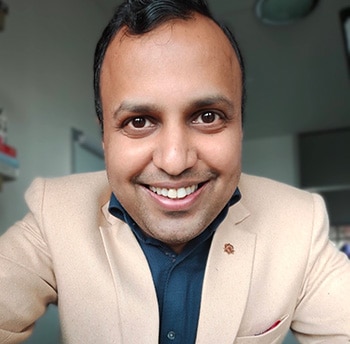
An open letter to athletes, founders, leaders, and anyone who suspects they are living a life smaller than they are capable of.
I want to admit something uncomfortable.
I think of myself as courageous.
I coach founders and leaders on bold moves. I talk about the impossible being possible. I stand on stages and say, “I am here to show you what is possible for us as humans.” And I mean every word.
But almost every week, when I sit down to research people doing things most of us would call unreasonable, I am reminded of something quieter and harder to admit: I also play safe.
I hesitate. I avoid the difficult call. I delay the honest post. I protect myself from judgment. I sometimes ask others to live at a level I am not fully living myself. That feels worth saying out loud.
The weekly ritual
Every week I do something that has become one of the most important things I do. I research people. Not market trends. Not competitor analysis. Not potential clients. I research human beings who are on missions that most people would call crazy.
This week alone I found:
Stefan van der Pal: a Dutch sports educator with a full-time job and three children, who swam 200km, biked 235km, and ran 205km in just over a single week. For children with brainstem cancer. Children with a painfully low survival rate. He just crossed Switzerland – 390km, 22,000 metres of climbing – last month, for the same kids.
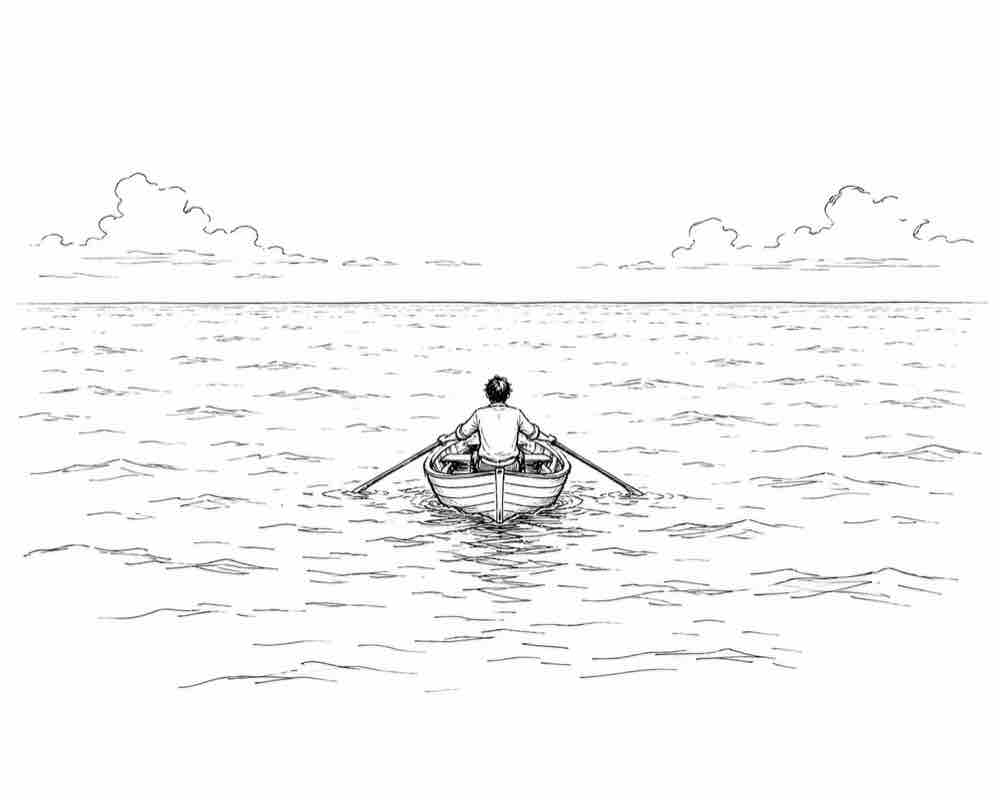
Daragh MacLoughlin: an Irish businessman from Galway who had never rowed in his life. He trained for two years. Then he entered the World’s Toughest Row – 4,800 kilometres across the Atlantic – and won the solo class outright. He beat experienced ocean rowers. He carried his late dog Jasper’s collar the entire way.
Three Dutch grandmothers – Carla, Ineke, and Trea – aged fifty-six to fifty-nine, rowing 5,000 kilometres across the Atlantic this December. None of them were professional endurance athletes. They published a children’s book about it first. Then they went to actually do it.
Benoît Bourguet: a forty-seven-year-old Belgian who set out to row the Atlantic alone to raise money for children living in poverty. Rogue waves capsized his boat 1,100 miles from Puerto Rico. He spent twenty-four hours in a life raft, alone, in the middle of the ocean, before a tanker diverted 110 miles out of its route to pull him out. The race is unfinished. He is planning to go back.
And then there are the stories from India.
Sheetal Devi, from Kishtwar in Jammu & Kashmir, born without arms. She taught herself to shoot a bow and arrow using her feet and her shoulder. She won gold at the Asian Para Games. She competed at the Paris Paralympics. She is nineteen years old.
Arif Khan, the only athlete from Kashmir to have ever competed at the Winter Olympics. He did it twice, in alpine skiing, despite limited winter-sports infrastructure and repeated funding challenges. Just a boy from the mountains who decided the world stage was not out of reach.
Piyali Basak, from West Bengal, who summited Everest, only to have her achievement certificate withheld by authorities in a dispute that had nothing to do with whether she reached the top. She reached the top. The paperwork became a wall. She is fighting it. And she will go back.
Sawan Barwal, an Indian Army athlete who made his marathon debut in Rotterdam earlier this month and broke a forty-eight-year-old record. On debut. He described the race afterwards as more mental than physical. He is right about almost everything worth doing.
I read these kind of stories every single week. And every single week, they do the same thing to me.
They give me goosebumps. And then they humble me to the floor.
The confession
Here is the truth. I have spent the last 6 years thinking I am bold. And in some ways, I certainly am.
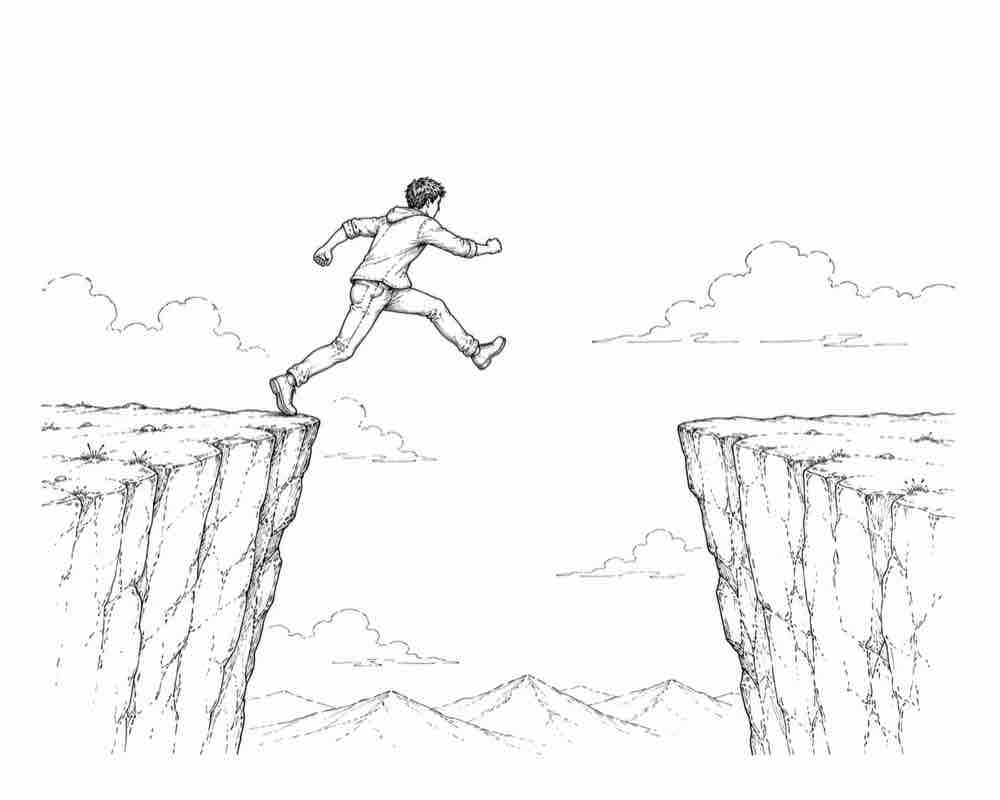
In 2011, I decided – as a quiet, introverted software engineer – to organise an anti-corruption protest march in India. I had no idea how to do it. I had no experience. I had no team, no network, no plan. I just had an idea and an enormous amount of self-doubt and anxiety.
I talked to my mother.
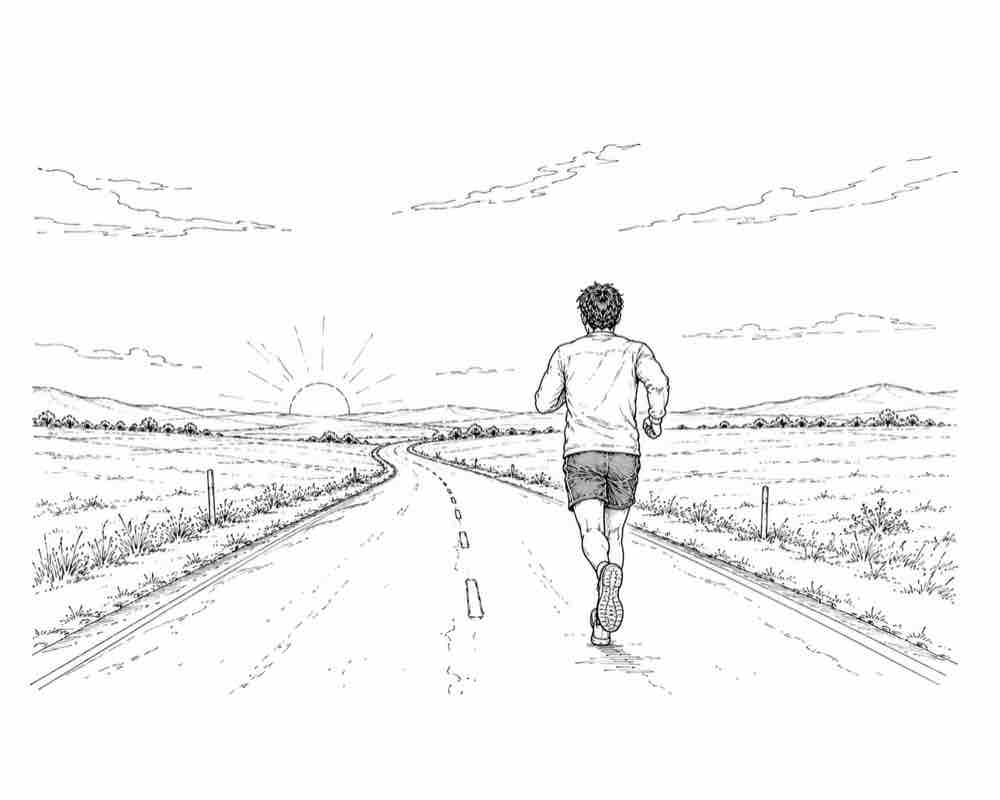
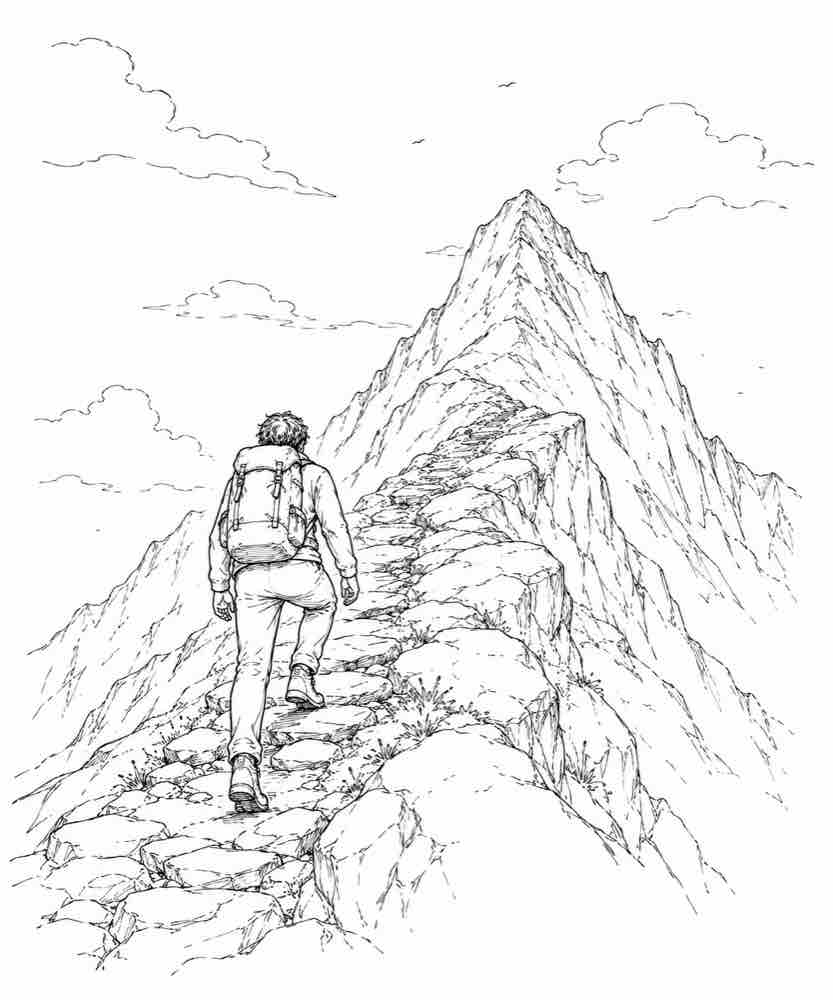
She listened. And when I finished explaining what I wanted to do, she said: “Yes, it is crazy. But you can do that. You will find out a way. Just put one foot after the next.”
I did. Four hundred people walked eleven kilometres that day.
My mother passed away the following year, in 2012.
It was only after she was gone that I understood what she had been for me. She had been my rock. Every impossible thing I had ever done – I had done it because she believed it was possible before I did. She never made it about her. She just stood beside me and said: go.
That is why I coach business leaders and athletes alike. That is why I run my business: 10GenPartners, where we help founders build firms to a hundred million and beyond, and where we do the inner work that the outer work demands. That is why, every week, I sit down, find these extraordinary human beings, and send them messages. Not because I want something from them. Because I want them to know someone sees them. Someone is standing beside them. Someone believes, as my mother believed in me, that they will find the way.
But here is the uncomfortable part I promised I would tell you.
Reading about Joël, twenty-three years old, longboarding through rain and loneliness and self-doubt across half of Europe for a cause she believed in while I some weeks cannot bring myself to make a difficult phone call I have been putting off. Reading about Patrycja going from a chemotherapy drip to a world record while I sometimes let a fear of judgment stop me from writing something honest. Reading about Daragh, who had never rowed a single stroke in his life, climbing into a boat and crossing an ocean while I am so afraid of water that I have never learned swimming.
Reading about Sheetal Devi inventing her own archery technique without arms while I hesitate to try something new because I am afraid it will not work. This is not self-flagellation. This is not false modesty.
This is me telling you something true: I do not always live at the level I ask others to live at. And sitting with these stories every week is one of the ways I stay accountable. One of the ways I refuse to let myself settle. It is a reminder that I am a human – just like anybody else.

The people I already walk beside
I have been privileged to work with some extraordinary athletes and leaders over the years.
One of them is Abhijit Bhattacharya. Abhijit captained the Indian Volleyball Team. He represented India in twenty-two international championships over ten years and won eight international medals, including five golds. He competed at the Busan Asian Games. He mentored Kolkata Thunderbolts to the Prime Volleyball League Season 1 title.
But what he has done since stepping back from the court may be even more significant.
Abhijit founded the Brahmaputra Volleyball League, today recognised as one of the world’s largest community-based grassroots volleyball movements. Under his leadership, the BVL has grown from fifty to four hundred teams. It connects five hundred villages across Northeast India. It has introduced twelve thousand children to volleyball, mobilised two thousand volunteers, and expanded into Odisha, Jammu & Kashmir, Jharkhand, Madhya Pradesh, and Manipur. It earned Silver Certification from the FIVB Volleyball Foundation – the first grassroots initiative globally to receive that recognition.
In 2025, the International Olympic Committee named Abhijit the Global Winner of the Gender Equality, Diversity and Inclusion Champions Award. He once told me: “I come from a small town and was restricting myself to a very narrow goal. Now I see the big picture and express myself clearly. I ask for what I want and am challenging myself without apprehensions.”
That shift – from a narrow goal to a big picture – is the whole game. In sports, in business, in life.
I have worked with a former Dutch national distance runner who discovered that their performance ceiling was not physical – it was the story they told themselves about who they were allowed to become. With Indian badminton champions – men and women – who went from good to genuinely great not because their technique improved, but because something unlocked inside them. These same champions have also told me the vacuum and identity crisis they have faced since retirement – like they do not know who they are anymore.
And I have worked with founders and business leaders whose versions of impossible look very different from rowing an ocean but feel exactly the same on the inside. Ashwin Date, co-founder of Tekdi Technologies, told me after a year together: “We have doubled revenues and grown our team 1.8x. But more importantly, we are able to handle any challenge that comes our way with calm.”
Siddharth Goyal, founder of Ukumi, said: “I couldn’t have imagined being in this situation last year. I would have given three years for what happened in the last one.” Pradeep Banavara, formerly VP of Product at Swiggy: “What I could have done in two months, I was able to get done in two days.”
Different oceans. The same human dreams, challenges, and experience.
What courage actually looks like
I think most of us carry an image of courage that is sanitised and romanticised. Courage is the big decision. The dramatic moment. The speech. The leap.
But Daragh was not courageous in a single moment. He was courageous every morning for two years when he got in a boat and practiced something he was terrible at. Joël was not courageous on the day she left. She was courageous on day forty, crying alone on a road in the rain, choosing to push forward anyway.
Stefan van der Pal does not have a dramatic origin story. He has a full-time job and three young children and brainstem cancer patients who are not his responsibility but who became his mission. He shows up for them. Every year. With less sleep than he should have. Without anyone making him do it.
Sheetal Devi did not wait for the sport to accommodate her. She rearchitected it.
Piyali Basak was told her achievement was invalid. She disagrees. She is going back up.
Courage, in my experience, is almost always quieter than we imagine. And far more relentless.
The leaders I work with at 10GenPartners are not short on ideas or ambition. What they run short on is the willingness to sit in the discomfort of not knowing, to keep going when the market does not respond, to make the call that no one else will make, to lead when it is not comfortable to lead. That is the same courage. A different ocean. The same demand.

The thing I am most proud of
My mother never saw what came after the march.
She did not see the companies that grew. The athletes who went beyond their limits. The leaders who found their voice. The conversations that changed directions for people. The podcast episodes – over three hundred and thirty of them now – where I have sat with humans who are doing the impossible and asked them: what is it costing you? What is it for? What do you know now that you wish you had known at the start?
She did not see Abhijit take twelve thousand children in Northeast India and give them a sport, and through that sport, a belief in themselves.
But I believe she would have recognised all of it. Because she understood, before I did, that the point was never the march. The point was: do you believe you can find a way? And are you willing to put one foot after the next?
I am still learning to answer yes to that question every day. Some days I do better than others.
My invitation to you
I am not writing this to inspire you in a comfortable way. I am writing this primarily for me – so that I can come back read this every few months. I am writing this because I think most of us, myself absolutely included, are living at a fraction of what we are capable of. And we have made peace with that. We call it being realistic. We call it balance. We call it wisdom. We call it a stable life.
Sometimes it is. Sometimes it is just fear with better vocabulary.
The people I have named in this letter are not superhuman. Milli is a fifty-year-old woman who decided her fiftieth birthday would mean something. Daragh is a businessman from Galway. Joël is twenty-three and was dealing with her own depression while she did it. Sheetal is nineteen. Piyali is a woman from West Bengal who climbed Everest and then got told it did not count, and is refusing to accept that verdict. Sawan is a soldier who broke a forty-eight-year record on debut and described it as more mental than physical.
These are people – just like you and me. With fear. With doubt. With days when they wanted to stop.
They went anyway.
The question is not whether you are capable of that. You are. We all are. I have seen it too many times to believe otherwise.
The question is: what is your ocean? What is the thing that you keep saying you will do when the timing is better, when the conditions are right, when you feel more ready? What is it that would make you come alive? What is it worth failing miserably at?
The timing will not get better. The conditions are never right. You will not feel ready. As I have learned, readiness is never about time. It is about courage.
Just like the people above, when you declare yourself ‘ready’, you will find the way. You will put one foot after the next. My mother told me that in 2011 about a march she had never seen me attempt before.
She was right.
Sumit Gupta
Amsterdam, May 2026
I coach CEOs and their teams at 10GenPartners. I host the Choosing Leadership Podcast. Every week, I find people on impossible missions and I write to them – not because it is my job, but because it is my life’s work to stand beside people who are going where no one has gone before. If you are one of those people, or if you want to find out what your version of impossible looks like, write at sumit@deployyourself.com
Leave a Reply